Terroir's Crucial Voice in Champagne
Unveiling the distinct character of Aÿ, Verzenay, and Cramant in every effervescent sip.
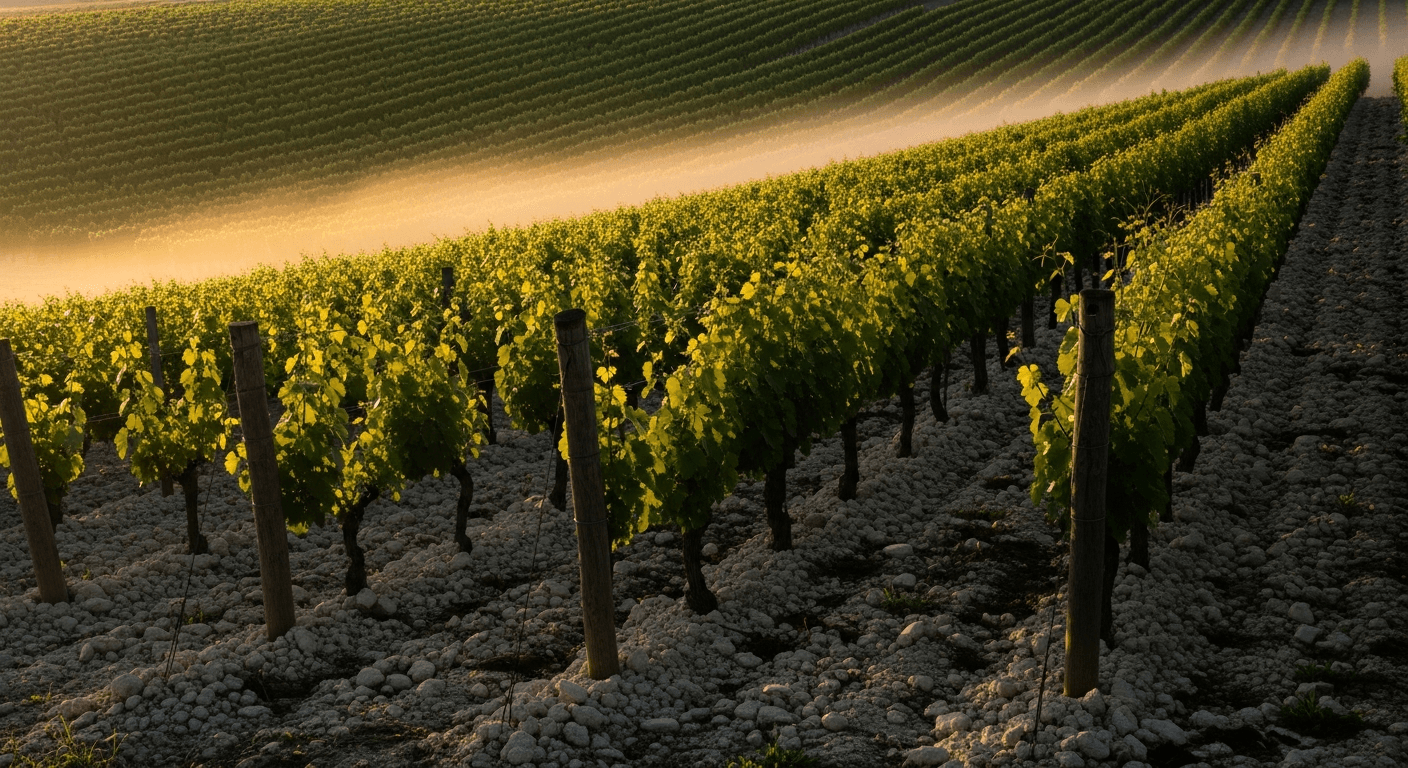
Many connoisseurs approach Champagne with an appreciation for its perceived consistency, a hallmark of luxury and celebration. Yet, beneath the elegant froth and meticulous blending, lies a profound tapestry of nuanced differences, where a mere few kilometres can dictate an entirely distinct vinous personality. The simplistic notion that 'Champagne is Champagne' dissolves upon a deeper tasting, revealing a complex truth: the region's stylistic diversity is rooted not solely in grape varietals or blending artistry, but fundamentally in the very ground from which the vines emerge. This intricate interplay of specific sites, known as terroir, offers a compelling narrative for the discerning palate.
This foundational concept of terroir encompasses the intricate interplay of soil, subsoil, climate, aspect, and human tradition, creating a unique fingerprint for each site. In Champagne, this translates into a mosaic of micro-climates and geological formations, most notably the omnipresent chalk. This Cretaceous-era chalk, composed of fossilised marine organisms, acts as both a crucial water reservoir during dry periods and a thermal regulator, slowly releasing warmth absorbed during the day. While the Échelle des Crus system, which historically ranked villages, was formally retired in 2010, its legacy endures. The 17 villages designated as Grand Cru still signify the highest quality potential for grapes originating from these hallowed sites, a testament to their exceptional terroir. These distinctions are not arbitrary; they are the bedrock of Champagne's profound stylistic diversity.
Consider Aÿ, a truly historic Grand Cru village nestled in the Vallée de la Marne, whose name once rivalled 'Champagne' itself as a descriptor for the region's sparkling wine. Here, Pinot Noir reigns supreme, thriving on the village's prominent south-facing slopes. These slopes capture maximum sunlight and offer natural protection from harsh northerly winds, contributing to a slightly warmer micro-climate. The deep, chalky soils of Aÿ, often with a significant clay content in the topsoil, impart a characteristic richness and power to its Pinot Noir. Wines from Aÿ are typically full-bodied, with a generous fruit profile-often red berries and stone fruit-a broad texture, and remarkable longevity. Esteemed houses such as Bollinger and Gosset have long championed Aÿ Pinot Noir, frequently featuring it prominently in their prestige Cuvées, demonstrating its capacity for profound depth and structured elegance.
A stark contrast emerges just a short distance away in the Montagne de Reims, specifically in the Grand Cru village of Verzenay. While also a bastion of Pinot Noir, Verzenay's terroir tells a distinctly different story. Its vineyards typically face north or north-east, exposing the vines to cooler conditions and a slower, more extended ripening period. This, combined with its unique chalk subsoil and higher elevation, contributes to a Pinot Noir that is often more linear, taut, and mineral-driven than that of Aÿ. Verzenay's wines are celebrated for their vibrant acidity, firm structure, and a distinctive chalky salinity that provides a crucial backbone to many Grand Marque blends. They often display nuanced red fruit, floral notes, and a remarkable capacity for age. The iconic Phare de Verzenay, a lighthouse amidst the vines, serves as a unique and unexpected landmark for this distinctive terroir.
Shifting from the dark-skinned Pinot Noir to the elegant Chardonnay, the Côte des Blancs offers the illustrious Grand Cru village of Cramant. This village is almost exclusively dedicated to Chardonnay, thriving on its pure Belemnite chalk soils, which are particularly evident in the subsoil structure and contribute to exceptional drainage. The east-facing slopes of Cramant ensure a gentle morning sun, fostering a slow and steady maturation of the Chardonnay grapes, preserving their delicate aromatics and acidity. Wines from Cramant are renowned for their ethereal finesse, crystalline minerality, and often a delicate citrus, white flower, and brioche aromatic profile. Producers like Pierre Gimonnet and Larmandier-Bernier exemplify Cramant's ability to produce Blanc de Blancs Champagnes of profound purity and precision, often exhibiting a pronounced saline finish that speaks directly of its chalky origins.
The distinct profiles of Aÿ, Verzenay, and Cramant underscore why the village, or 'cru', is not merely a geographical marker but a fundamental determinant of Champagne's character and quality. Each Grand Cru village offers a unique palette of flavours, textures, and aromatic nuances to the Chef de Cave. This inherent diversity allows for the intricate art of blending, where components from different villages are harmonised to create a consistent and recognisable house style. Conversely, it also enables the creation of single-village bottlings, often from specific parcels or lieux-dits, that express a pure, unadulterated terroir. Understanding these village-level distinctions elevates the appreciation of Champagne beyond a simple celebratory beverage to an exploration of geology, micro-climate, and centuries of viticultural mastery.
For the discerning palate of the Sparkling Book Club, recognising the subtle yet significant differences between these Grand Cru villages opens a new dimension of enjoyment and understanding. Seek out grower Champagnes that proudly display their village of origin on the label, or explore the prestige Cuvées of larger houses, which are often built upon the backbone of these very terroirs. Taste a Blanc de Noirs from the generous slopes of Aÿ alongside one from the structured vineyards of Verzenay; compare a Blanc de Blancs from the pure chalk of Cramant with one from a neighbouring Côte des Blancs village. In doing so, you move beyond mere consumption to an informed engagement with the liquid geography of Champagne, discovering that the true magic lies not in uniformity, but in the eloquent and diverse voices of its hallowed villages.
More from the cellar.
Bottle Shock: The Unseen Travail of Transported Wine
Unravelling the debate: does wine truly need repose after its journey?

The Enduring Effervescence of an Open Bottle
Unravelling the science and art of preserving sparkling wine's ephemeral magic.
The Silent Saboteurs of Sparkling Grandeur
Preserving the delicate effervescence of Champagne demands precise, consistent care.