Dégorgement: The Moment of Sparkling Clarity
This crucial final step unveils the true character of traditional method sparkling wines.
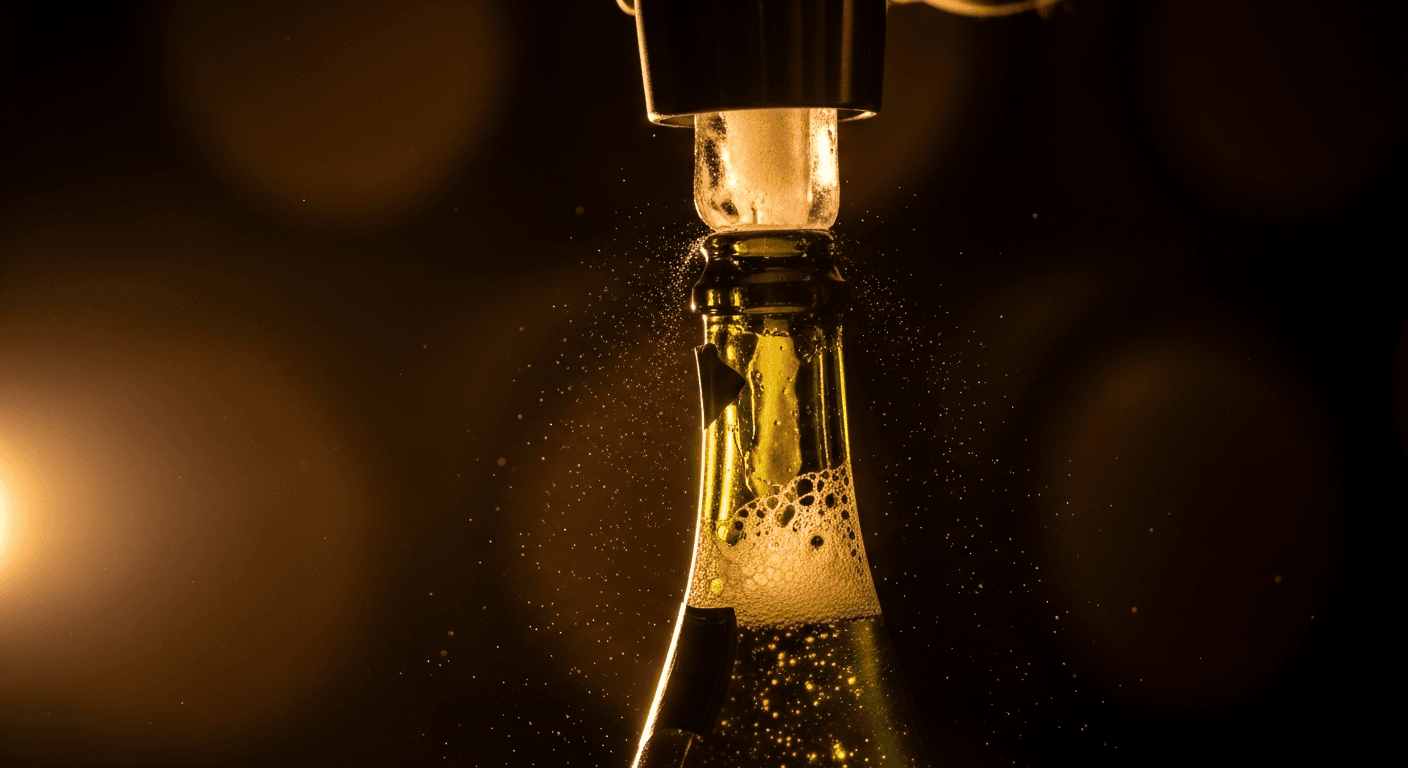
For centuries, enjoying sparkling wine meant contending with a cloudy pour, a natural consequence of secondary fermentation in the bottle. It was not until 1816 that Madame Clicquot, an astute Champagne vigneronne, alongside her cellar master Antoine Muller, revolutionised this challenge. They conceived of remuage, or riddling, a process that gradually shifts the yeast sediment to the bottle's neck, thereby paving the way for its eventual removal and the crystal-clear wines we cherish today.
The journey to effervescent clarity begins with the méthode traditionnelle, where a liqueur de tirage - a blend of yeast and sugar - is added to a still base wine before bottling. This initiates a secondary fermentation within the sealed bottle, producing the characteristic carbon dioxide bubbles and, inevitably, a deposit of spent yeast cells known as 'lees'. These lees contribute to the wine's complexity during a period of 'ageing on lees' (sur lie), imparting brioche, nutty, and creamy notes through a process called autolysis. To remove this sediment, the bottles undergo remuage, a meticulous operation of rotating and tilting them over weeks or months until the lees collect precisely in the neck. Historically, this was performed manually by a remueur on wooden pupitres, with a skilled individual capable of handling up to 40,000 bottles per day.
The Expulsion: À la Volée or À la Glace
Once the sediment is consolidated, the moment of dégorgement arrives. Traditionally, this was achieved à la volée - 'on the fly'. A highly skilled cellar worker would swiftly open the inverted bottle, allowing the internal pressure of approximately 6 atmospheres to expel the sediment, quickly covering the opening with a thumb to minimise wine loss. This artisanal method is still reserved for certain prestige Cuvées and large-format bottles, such as a Magnum. However, the dominant method today, known as dégorgement à la glace (ice disgorgement), was invented by Armand Walfard in 1884. This involves immersing the bottle neck into a refrigerated brine solution at around -25 °C, creating a frozen plug of wine that encapsulates the lees. When the crown cap is removed, the internal pressure effortlessly ejects this ice plug, leaving a pristine, clear wine with minimal loss. Modern disgorging lines can process an astonishing 2,000 to 18,000 bottles per hour.
Following the expulsion of the sediment, a small volume of wine is inevitably lost, creating a void in the bottle. This is immediately rectified by the addition of the liqueur d'expédition, more commonly known as the dosage. This critical blend, typically consisting of reserve wine and a precisely measured amount of sugar, is added to top up the bottle and, crucially, to balance the wine's inherent acidity. The quantity of sugar in the dosage determines the final sweetness style of the sparkling wine, ranging from the bone-dry Brut Nature (0-3 grams of sugar per litre) and Extra Brut (0-6 g/L), through to Brut (under 12 g/L), Extra Dry (12-17 g/L), Sec (17-32 g/L), Demi-Sec (32-50 g/L), and the sweet Doux (over 50 g/L). It is important to note that for drier styles, the dosage functions primarily as a balancing agent, harmonising the wine's sharp acidity rather than imparting overt sweetness. Historically, Champagne contained significantly higher levels of dosage than it does today, reflecting evolving consumer preferences.
Disgorgement Date: A Window into Maturity
The date of dégorgement is a vital piece of information, increasingly found on back labels, as it marks a pivotal transition in the wine's life. It signifies the end of the wine's protective period on its lees and the beginning of its bottle ageing journey, where a minute amount of oxygen introduced during the process starts a new evolutionary path. This is particularly significant for 'late disgorged' wines, often labelled Dégorgement Tardif (DT) or Récemment Dégorgé (R.D.). These exceptional Cuvées spend extended periods - often years or even decades - ageing on their lees, resulting in wines that, upon release, exhibit remarkable freshness, complexity, and exceptionally fine bubbles. Bollinger's R.D., for instance, famously pioneered this concept with the 1952 vintage, released in 1961, showcasing the profound impact of prolonged lees contact.
The disgorgement date provides invaluable insight into a sparkling wine's maturity and potential for further evolution, especially for non-vintage blends where a vintage date is absent. A more recent disgorgement date generally indicates a wine that is still youthful and vibrant, showcasing primary fruit and floral characteristics. Conversely, an earlier disgorgement, followed by extended bottle age, will often present a creamier texture and more evolved, tertiary aromas of toasted nuts and dried fruits. The increasing transparency from houses like Bruno Paillard, who began publishing disgorgement dates in 1985, and more recently Veuve Clicquot with QR codes (since 2014) and Krug with ID codes (since 2012), empowers consumers to make more informed choices.
The precise art of dégorgement is far more than a technical necessity; it is a defining moment that shapes the very essence of a sparkling wine. It is the final, dramatic flourish in a long and intricate winemaking process, where the accumulated efforts of viticulture and cellar craft culminate in a wine ready for enjoyment. Next time you open a bottle, consider the journey it has taken, perhaps seeking out the disgorgement date to compare the vibrant freshness of a recently released wine with the profound complexity of a late-disgorged expression. Observing the nuanced interplay of autolytic characters, fruit purity, and the subtle influence of the dosage will deepen your appreciation for this captivating, effervescent world.
More from the cellar.
Bottle Shock: The Unseen Travail of Transported Wine
Unravelling the debate: does wine truly need repose after its journey?
The Enduring Effervescence of an Open Bottle
Unravelling the science and art of preserving sparkling wine's ephemeral magic.
The Silent Saboteurs of Sparkling Grandeur
Preserving the delicate effervescence of Champagne demands precise, consistent care.