Sussex's Ascent: A Sparkling Revolution
Global warming reshapes viticulture, positioning England's South Downs as a formidable rival to Champagne.
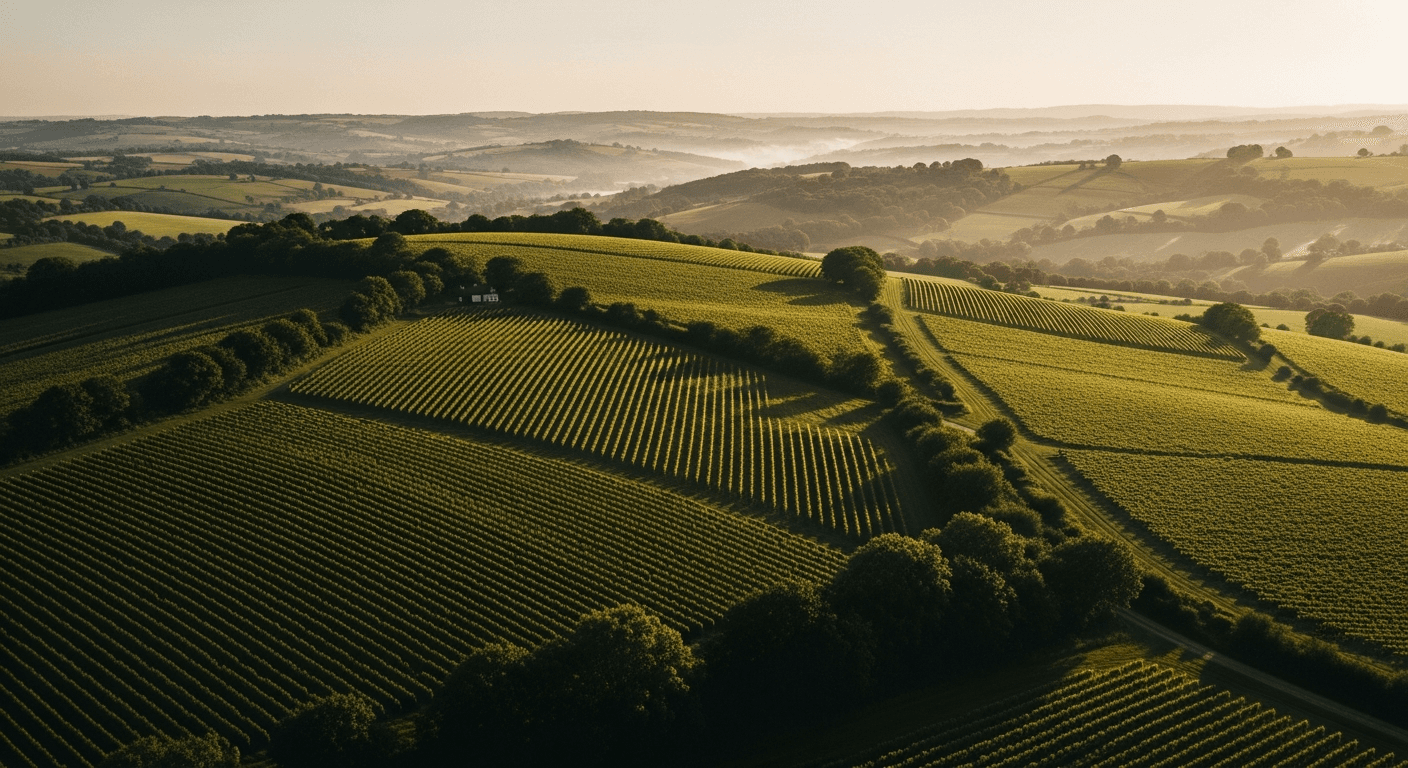
For generations, the notion of English sparkling wine challenging the established supremacy of Champagne seemed improbable, a quaint ambition at best. Yet, a seismic shift has occurred, exemplified by a blind tasting in 2016 where English sparkling white wines were chosen over comparable French Champagnes, even deceiving seasoned French tasters. This remarkable transformation is not merely a testament to diligent viticulture, but a direct consequence of a changing climate that has rendered the southern counties of England increasingly amenable to premium grape cultivation.
The average temperatures across Western Europe, including the United Kingdom, have risen by approximately 3 °C since 1900, with more pronounced increases observed in recent decades. In Sussex, temperatures have climbed by almost a degree since the 1980s, enabling the consistent ripening of traditional méthode traditionnelle grape varieties that were once marginal. This extended growing season, coupled with slightly cooler temperatures overall compared to Champagne, allows grapes to achieve full ripeness while retaining the crucial natural acidity vital for high-quality sparkling wine. Indeed, parts of southern England are now experiencing growing temperatures akin to those found in Champagne 60 years ago.
Beneath the rolling hills of the South Downs in Sussex lies a geological secret: a chalk bedrock that is a direct continuation of the same Upper Cretaceous formation found in Champagne. This ancient, free-draining chalk provides vines with excellent drainage while retaining sufficient moisture deep within the sub-soil, compelling roots to delve profoundly in search of water and nutrients. The chemical composition of this chalk also influences the grape must, promoting higher levels of tartaric acid and a lower pH, resulting in wines with a precise, clean acid structure that is fundamental for freshness and longevity. This shared geological foundation is a cornerstone of Sussex's burgeoning success.
English sparkling wine producers, particularly those in Sussex, predominantly employ the classic Champagne grape varieties: Chardonnay, Pinot Noir, and Pinot Meunier. These three noble grapes constitute over 70% of the UK's total vineyard plantings dedicated to sparkling wine. The wines are crafted using the méthode traditionnelle, involving a secondary fermentation in the bottle, which develops the characteristic fine bubbles and complex autolytic notes of brioche, toast, and almond through extended ageing on lees. This meticulous process, identical to that used in Champagne, ensures the development of sophisticated flavour profiles and elegant mouthfeel.
Leading the Charge
Pioneering estates have been instrumental in establishing Sussex's reputation. Nyetimber, which planted its first vines in West Sussex in 1988, was the first English producer to exclusively cultivate Chardonnay, Pinot Noir, and Pinot Meunier for sparkling wine. Its Blanc de Blancs 2016 Magnum made history in 2025 by becoming the first sparkling wine produced outside of Champagne to win the Champion Sparkling Wine Trophy at the International Wine Challenge, with Head Winemaker Cherie Spriggs also named Sparkling Winemaker of the Year for the second time. Ridgeview, established in 1995 in East Sussex, further solidified English sparkling wine's standing by winning the Decanter World Wine Awards International Trophy for Best Sparkling Wine in 2010 for its Grosvenor Blanc de Blancs 2006, a feat never before achieved by a non-Champagne wine. Other notable estates like Rathfinny, founded in 2010 and now comprising over 93 hectares of vines, are also contributing to the region's output, with Sussex wines accounting for 28% of the total UK wine production in 2023. The total area under vine in the UK reached 4,209 hectares in 2023, representing a 123% increase over the preceding decade.
Adapting to New Realities
While climate change has bestowed advantages, it also presents challenges. The increased unpredictability of weather patterns, including earlier budburst followed by late spring frosts, and periods of concentrated heavy rainfall, necessitates constant adaptation from winemakers. For instance, a milder winter in Essex in 2024 led to early budding, followed by a surprise April frost that caused significant crop damage in some Chardonnay vines. Milder temperatures also foster higher humidity, increasing the risk of diseases such as mildew. English viticulturists are becoming adept climate scientists, adjusting practices year by year rather than relying on a static formula.
The trajectory of English sparkling wine, particularly from Sussex, remains one of ascendance. With its Protected Designation of Origin (PDO) status granted in 2022, Sussex wine is now legally recognised for its quality and origin, on par with established European regions. The future promises continued innovation and refinement. For those seeking wines of genuine elegance, remarkable acidity, and complex character, exploring a Sussex Blanc de Blancs or a nuanced Cuvée is highly recommended. These wines are not merely alternatives to Champagne; they are distinct expressions of a terroir transformed, offering a compelling narrative in every effervescent glass.
More from the cellar.
Tasmania's Ascendant Sparkling Wines
Australia's cool-climate island is redefining premium Méthode Traditionnelle.
Aube's Ascent: Champagne's Southern Frontier
Once overlooked, this distinct southern region now drives Champagne's most dynamic shifts.

Champagne's Elite Villages: A Classification Unveiled
Discovering the 17 Grand Cru and 42 Premier Cru heartlands of Champagne.