Blanquette de Limoux: The First Sparkling Wine
Discovering France's ancestral bubbly, documented centuries before its famed counterparts.
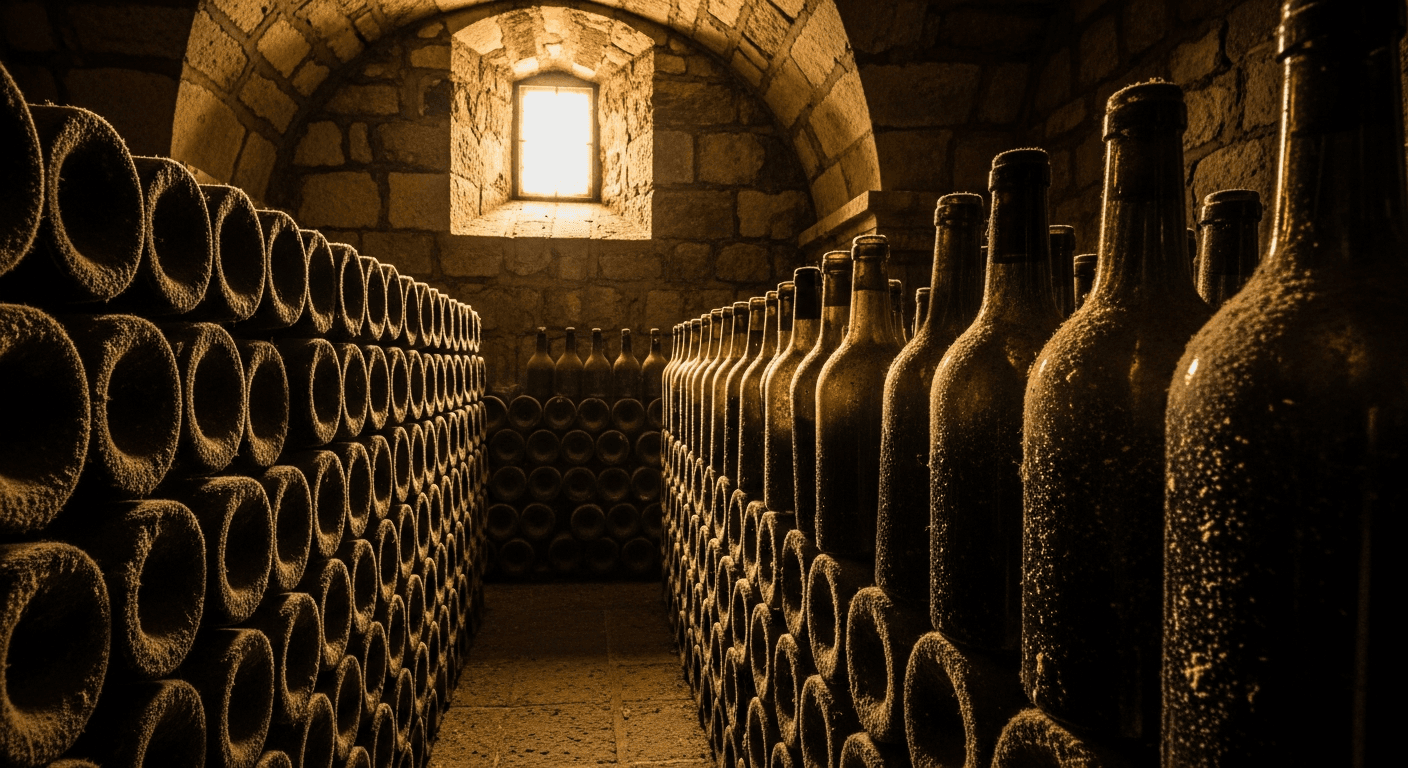
For many, the narrative of sparkling wine begins in Champagne, often attributed to the monastic efforts of Dom Pérignon in the 17th century. Yet, historical records reveal a different genesis, one rooted deep in the Languedoc-Roussillon region of France. It is here, amidst the rolling hills around Limoux, that the world's first documented sparkling wine, Blanquette de Limoux, emerged, with its origins precisely traced to the year 1531.
This pioneering achievement belongs to the Benedictine monks of the Abbey of Saint-Hilaire, who, in 1531, produced a wine that famously developed bubbles after being bottled. A compelling historical artifact, an accounts ledger from 1544, even mentions a specific order for "four pints of blanquette" by the local Lord of Arques, providing tangible proof of its early existence and appreciation. The name "Blanquette" itself is derived from the local Occitan word "blanqueto," meaning "small white," a likely reference to the whitish bloom on the Mauzac grape's leaves, the primary varietal of this historic fizz.
The Limoux region, situated in the Aude department in the eastern foothills of the Pyrenees, just south of Carcassonne, benefits from a unique confluence of climates. Its terroir is a rare hybrid of oceanic and Mediterranean influences, resulting in a cooler and moister environment than much of the surrounding Languedoc. Vines thrive at altitudes ranging from 100 to 600 metres, planted in rocky soils composed of clay, sandstone, and limestone, which contribute to the grapes' essential natural acidity and extended ripening period.
At the heart of Blanquette de Limoux lies the Mauzac grape. This indigenous varietal is mandated to constitute a minimum of 90% of the blend for Blanquette de Limoux AOC, with Chardonnay and Chenin Blanc permitted for the remaining portion. Mauzac imparts distinctive aromatic characteristics, often described as notes of crisp green apple, pear, and delicate white flowers, sometimes complemented by hints of almond or brioche. For the Blanquette Méthode Ancestrale AOC, the purity of Mauzac is paramount, requiring a 100% composition of this grape, ensuring a direct link to the earliest expressions of Limoux's sparkling wine.
Production Methods: Ancestrale and Traditionnelle
Limoux is distinguished by two primary methods for its sparkling wines. The Blanquette Méthode Ancestrale represents the oldest technique, a single-fermentation process where the wine is bottled while still undergoing its primary fermentation, without the addition of liqueur de tirage or dosage. This results in a naturally sweeter, often slightly cloudy wine with a lower alcohol content, typically around 6-7%. The fermentation concludes in the bottle, traditionally in March following the harvest. In contrast, Blanquette de Limoux AOC is produced using the Méthode Traditionnelle, mirroring the process used in Champagne. This involves a secondary fermentation in the bottle, initiated by adding a liqueur de tirage, followed by a minimum of nine months aging sur latte on its lees before remuage and dégorgement. A third appellation, Crémant de Limoux AOC, also employs the Méthode Traditionnelle, but allows a broader blend of grapes, predominantly Chardonnay (40-70%) and Chenin Blanc (20-40%), with Mauzac (0-20%) and Pinot Noir (0-10%) playing supporting roles, and requires a minimum of 12 months on lees.
Blanquette de Limoux, whether Brut or Demi-Sec, presents a vibrant pale yellow hue with fine, persistent bubbles. Served ideally at 6-7 °C, its aromatic profile is typically fresh and lively, with pronounced notes of green apple, citrus, and sometimes a delicate hint of honey or toasted bread from its time on lees. The palate is characterised by a creamy texture and a refreshing acidity that carries through to a clean finish. This elegant balance makes it a versatile wine, distinct from the often richer, more autolytic character of Champagne or the fruit-forward simplicity of many Proseccos. The mandated yield for Blanquette de Limoux, at 50 hectolitres per hectare, is among the lowest for sparkling wines in France, underscoring a commitment to quality.
A Legacy of Bubbles
Blanquette de Limoux received its Appellation d'Origine Contrôlée (AOC) status in 1938, making it one of France's earliest appellations. Its historical significance was not lost on connoisseurs of past centuries; notably, Thomas Jefferson, the third American President, was known to be an admirer, purchasing bottles for his cellar between 1819 and 1826. Today, Blanquette de Limoux offers a compelling proposition for those seeking authenticity and value in sparkling wine. It stands as a testament to centuries of winemaking tradition, embodying a nuanced balance of fruit, texture, and effervescence.
To truly appreciate the depth of sparkling wine history, one must seek out Blanquette de Limoux. Its crisp, apple-driven character makes it an excellent aperitif, yet its versatility extends to pairings with fresh seafood, poultry, or even light fruit-based desserts. Exploring this ancestral bubbly is not merely a tasting experience; it is an indulgence in a living legacy, a direct link to the very first effervescent wines that delighted palates nearly five centuries ago. It serves as a profound reminder that the world of fine wine holds many such treasures, awaiting rediscovery beyond the more commonly celebrated names.
More from the cellar.
Tasmania's Ascendant Sparkling Wines
Australia's cool-climate island is redefining premium Méthode Traditionnelle.
Aube's Ascent: Champagne's Southern Frontier
Once overlooked, this distinct southern region now drives Champagne's most dynamic shifts.
Champagne's Elite Villages: A Classification Unveiled
Discovering the 17 Grand Cru and 42 Premier Cru heartlands of Champagne.