Dosage: The Winemaker's Final Signature
A precise measure of sugar and wine, defining sparkling character and balance.
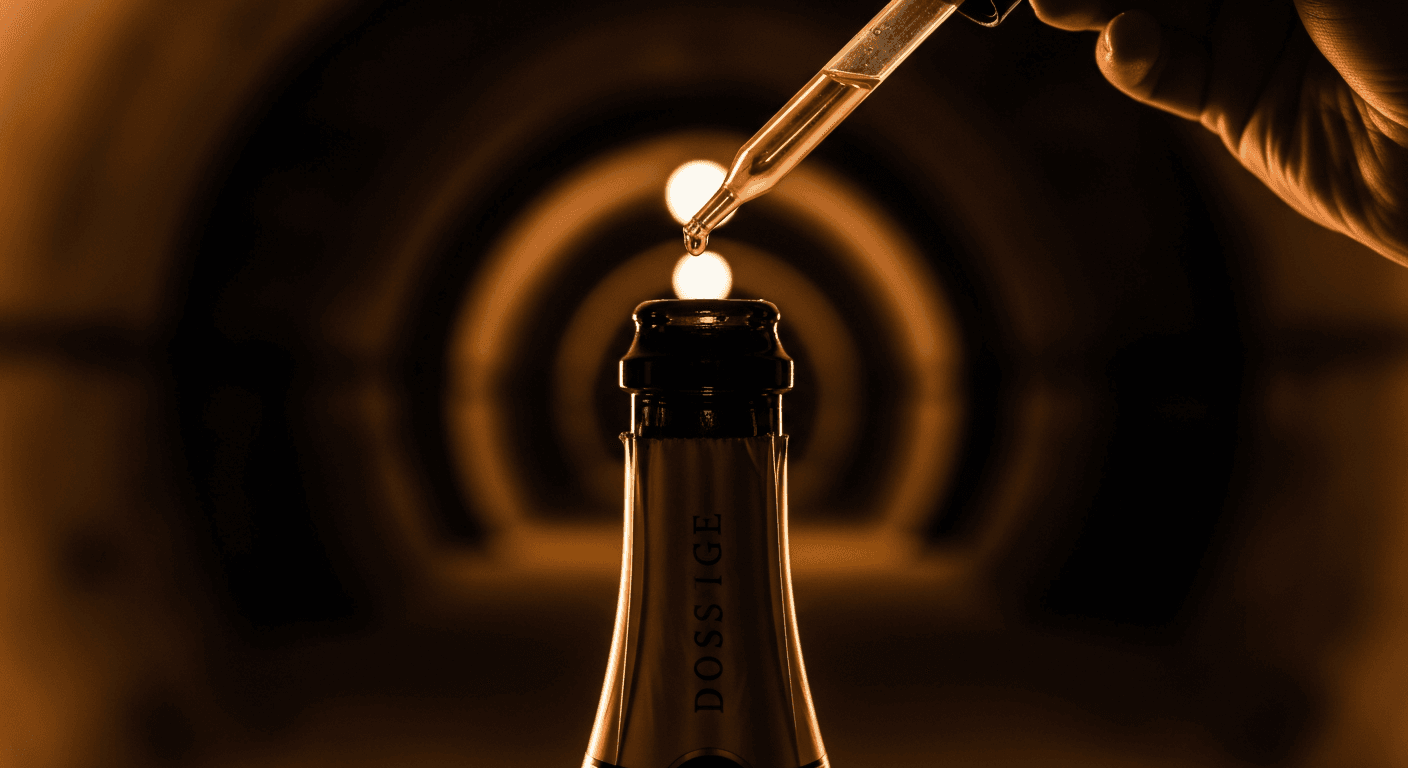
Imagine a sparkling wine from the 19th century, not crisp and dry as many prefer today, but intensely sweet, with some bottles destined for the Russian market containing an astonishing 250-330 grams of sugar per litre. This historical preference stands in stark contrast to the contemporary palate, highlighting the profound evolution of sparkling wine styles and the pivotal role of Dosage - the seemingly minor, yet immensely impactful, final addition that sculpts a wine's ultimate expression.
At its core, Dosage is the introduction of a liqueur d'expédition - a blend of wine and sugar - to a traditional method sparkling wine after disgorgement. This process serves two crucial purposes: to replace the small volume of liquid lost when the frozen plug of spent yeast cells (lees) is expelled from the bottle, and, more significantly, to fine-tune the wine's balance and character. Typically, a winemaker adds a modest 6-12 millilitres of this liqueur to each bottle. Far from merely sweetening the wine, its primary function is to harmonise the often-high acidity inherent in sparkling wines, rounding out the palate and enhancing existing flavours, much like a chef seasons a dish to bring out its best qualities.
The journey from historically sweet to predominantly dry sparkling wine is a testament to shifting consumer tastes and improved viticultural practices. For centuries, high sugar levels were common, partly to mask imperfections in wines from less ripe grapes and partly to cater to regional preferences. However, by the mid-19th century, a demand for drier styles emerged, notably from the British market, which favoured Champagne with 22-66 grams of sugar per litre. This trend culminated in 1874 when Madame Pommery introduced one of the first commercially successful Brut Champagnes, a style that would eventually dominate the market by the mid-20th century.
The Sweetness Spectrum
The amount of sugar in the liqueur d'expédition dictates the wine's official sweetness classification, a scale regulated by the European Union. At the driest end, Brut Nature, Zéro Dosage, or Pas Dosé wines contain 0-3 grams of sugar per litre, meaning no sugar is added. Moving up, Extra Brut has 0-6 g/L, while Brut, the most ubiquitous style, contains less than 12 g/L. Interestingly, Extra Dry (12-17 g/L) is actually sweeter than Brut, a nomenclature quirk stemming from historical changes in taste. Further along the spectrum are Sec (17-32 g/L), Demi-Sec (32-50 g/L), and the rarely seen Doux (over 50 g/L), which is a dessert-sweet style.
This final decision on Dosage is where the winemaker's artistry truly manifests, acting as their "signature" on the finished wine. Each year, winemakers conduct meticulous Dosage trials, tasting the base wine with varying sugar levels to pinpoint the precise amount needed to achieve the desired balance of acidity, fruit, and texture. This delicate calibration ensures the wine is approachable and harmonious, rather than overtly sweet. The choice of the base wine for the liqueur d'expédition is also critical; some producers use reserve wines from older vintages to impart additional complexity and depth, further shaping the wine's unique character.
Evolving Philosophies
The composition of the liqueur d'expédition itself offers a canvas for nuance. While typically a blend of still wine and cane or beet sugar, it can also include grape must, rectified concentrated grape must, or, in historical contexts, even a touch of brandy. The type of sugar, such as sucrose or fructose, can also subtly influence the wine's sensory profile. Over the last decade, there has been a discernible trend towards lower Dosage levels, driven by riper grapes from warmer vintages and a consumer preference for purer, terroir-driven expressions. For instance, Moët et Chandon reduced the Dosage for their best-selling Brut Impérial from 12 g/L to 9 g/L in 2011. While zero-Dosage wines are gaining popularity, some experts argue that a judicious amount of sugar is vital for a sparkling wine's ageing potential and to help it recover from the oxidative shock of disgorgement.
The art of Dosage remains one of the most critical and subtle steps in traditional method sparkling wine production. It is the winemaker's ultimate opportunity to sculpt the wine, to imbue it with a specific voice and personality. For the discerning enthusiast, understanding Dosage allows for a deeper appreciation of the nuances within a bottle. Next time you uncork a Cuvée, consider the winemaker's final, deliberate touch - that precise measure of sugar and wine that defines its very soul. Explore different styles, from a bracing Brut Nature to a richer Demi-Sec, and discover how this singular decision shapes your sparkling experience.
More from the cellar.
Bottle Shock: The Unseen Travail of Transported Wine
Unravelling the debate: does wine truly need repose after its journey?
The Enduring Effervescence of an Open Bottle
Unravelling the science and art of preserving sparkling wine's ephemeral magic.
The Silent Saboteurs of Sparkling Grandeur
Preserving the delicate effervescence of Champagne demands precise, consistent care.