Uncorking History: The True Sparkle's Origin
Beyond legend, the scientific genesis of Champagne reveals a surprising transatlantic heritage.
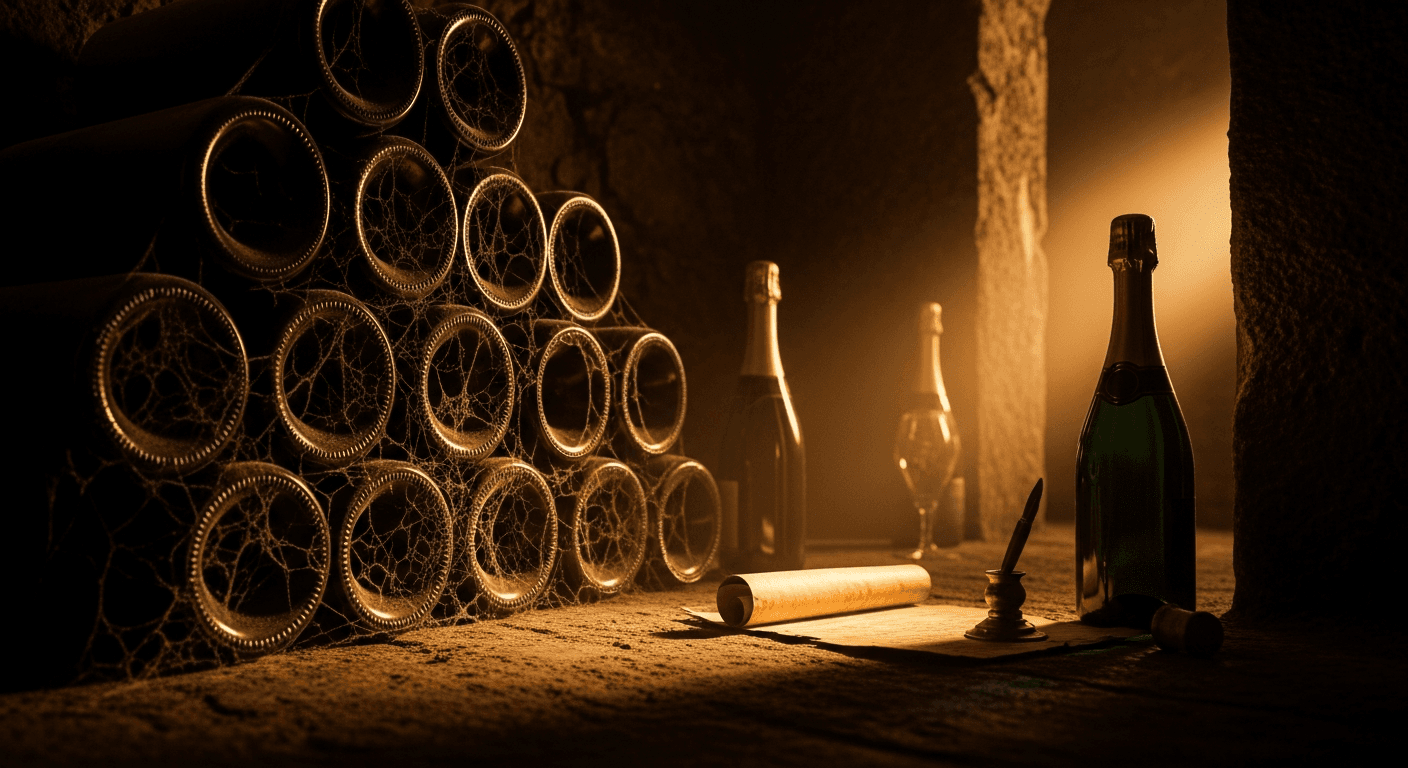
The pervasive narrative of Dom Pérignon, the Benedictine monk who supposedly exclaimed, 'Come quickly, I am tasting the stars!' upon discovering sparkling wine, is one of the wine world's most enduring and romanticised myths. This charming anecdote, often placed around 1697, forms the bedrock of Champagne's origin story, yet the historical truth, meticulously documented, points to a rather different genesis, one deeply rooted in seventeenth-century English scientific inquiry and industrial innovation.
Indeed, Dom Pierre Pérignon, cellar master at the Abbey of Hautvillers from 1668 until his death in 1715, was undoubtedly a pivotal figure in the development of still wines from the Champagne region. His genius lay not in inventing effervescence, but in mastering the art of blending grapes from different vineyards to achieve balance and complexity, improving vineyard management, and refining techniques to prevent-rather than encourage-the very bubbles that now define the region's most famous export. He also contributed to the use of stronger glass bottles and more effective cork closures, innovations crucial for wine stability.
However, the earliest scientific documentation of secondary fermentation deliberately induced in a bottle for the purpose of creating sparkling wine originates not in France, but in England. In 1662, a mere six years before Dom Pérignon even arrived at Hautvillers Abbey, the English physician and scientist Christopher Merret presented a paper titled 'Some Observations concerning the Ordering of Wines' to the newly formed Royal Society. This groundbreaking eight-page document detailed the practice of adding sugar to finished wines to provoke a second fermentation, thereby making them 'brisk and sparkling'. Merret was also the first recorded individual to use the term 'sparkling wine'.
Merret's insights were not isolated; they were made possible by concurrent advancements in English industrial capability. Crucially, the British had developed significantly stronger glass bottles, capable of withstanding the immense pressure generated by in-bottle fermentation. Sir Kenelm Digby is often credited with perfecting these robust, coal-fired glass bottles, known as 'verre Anglais', around 1615-1630, which were far superior to their French counterparts at the time. Alongside this, the English were also adept at using proper cork stoppers, imported from Portugal, which provided a far more reliable seal than the oil-soaked hemp used in France. This combination of scientific understanding, robust containment, and effective sealing was indispensable for successful sparkling wine production.
In Champagne during the seventeenth century, the appearance of bubbles was largely an accidental and often undesirable phenomenon. The region's cool climate frequently caused fermentation to halt during winter, only to restart in the warmer spring temperatures, trapping carbon dioxide within the bottles. This often led to bottles exploding, a hazardous occurrence that could result in cellar losses of 20-90% and necessitated workers wearing iron masks for protection. Far from being celebrated, these 'devil's wines' were seen as a flaw that winemakers like Pérignon actively sought to eliminate.
While the Benedictine monks of the Abbey of Saint-Hilaire in Limoux are credited with producing the earliest documented sparkling wine, Blanquette de Limoux, as early as 1531, Merret's contribution stands apart as the first deliberate scientific description of the méthode traditionnelle. It was this systematic approach, rather than serendipitous accident, that laid the blueprint for controlled sparkling wine production. French Champagne houses would later adopt and refine these methods, leveraging their superior viticultural knowledge and specific terroir, eventually securing global prestige for their 'vin mousseux'.
The true history of Champagne's effervescence is a testament to cross-cultural innovation: English scientific observation and industrial might provided the technical foundation, while French viticultural artistry elevated the product to an icon of luxury. Understanding this dual heritage adds a compelling layer to every flute of Brut or Demi-Sec. The next time you savour a glass, consider the journey from Merret's precise observations to Pérignon's masterful blends, and perhaps even explore the burgeoning English sparkling wine scene, a contemporary echo of this intertwined history.
More from the cellar.
Bottle Shock: The Unseen Travail of Transported Wine
Unravelling the debate: does wine truly need repose after its journey?
Tasmania's Ascendant Sparkling Wines
Australia's cool-climate island is redefining premium Méthode Traditionnelle.
Non-Vintage: A Cellar Master's Legacy
Behind Champagne's enduring house style lies the profound skill of its guardian.