The Cult of Grower Champagne
Small producers are reshaping perceptions of Champagne, one terroir-driven bottle at a time.
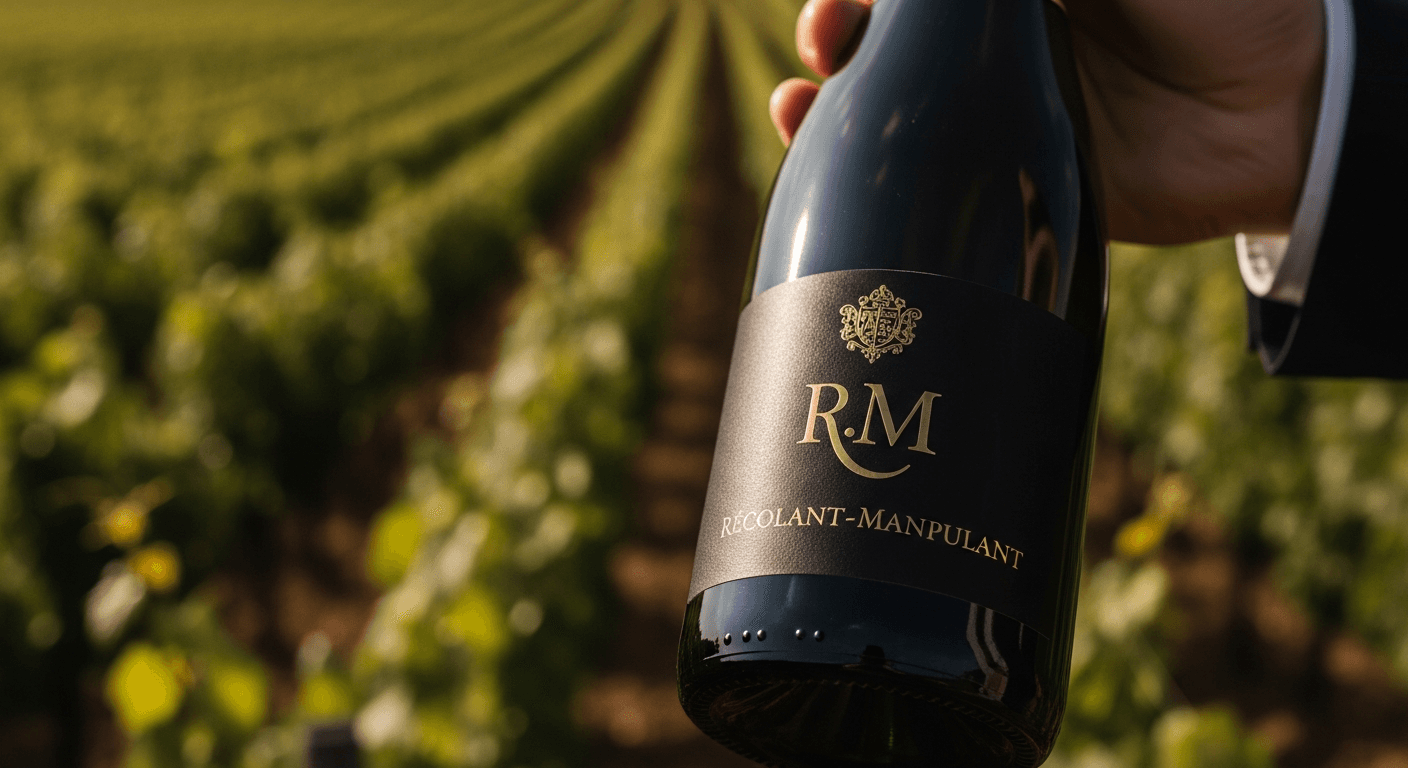
For centuries, the grand Maisons of Champagne have commanded global markets, their consistent blends synonymous with celebration and luxury. Names such as Moët & Chandon and Veuve Clicquot, classified as Négociant-Manipulant (NM) producers, have long been the region's ambassadors, crafting millions of bottles annually by sourcing grapes from numerous vineyards across Champagne [1, 27, 33]. However, beneath this polished surface, a profound shift has been unfolding, driven by individual vignerons whose singular expressions are now capturing the imagination of discerning palates, birthing what many now refer to as the "cult" of grower Champagne. This movement champions the Récoltant-Manipulant (RM) producer, a term found in tiny print on the label, signifying a winemaker who crafts Champagne predominantly from their own estate-grown grapes [3, 5, 8, 11].
The distinction between NM and RM producers is fundamental to understanding this evolving landscape. Négociant-Manipulants, representing the vast majority of Champagne shipments- 70% by volume and 80% by value, according to 2023 figures- prioritise a consistent house style, blending grapes from diverse parcels and even vintages to achieve a predictable flavour profile year after year [20, 25]. This approach, while ensuring reliability, often means the individual character of a specific vineyard or village can be subsumed within a broader brand identity [3, 13]. In contrast, Récoltant-Manipulants are grape growers who also make their own wine, using at least 95% of their own fruit [2, 11, 25]. This hands-on control, from vineyard management to bottling, allows for an unadulterated expression of terroir- the unique combination of soil, climate, and human touch that defines a specific site [2, 8, 13].
The modern grower Champagne movement, though rooted in historical practices, truly began to gain momentum in the mid-20th century. Historically, most growers sold their harvests to the larger houses, often at prices that left them financially constrained [6, 7, 13]. Frustration among these small growers started to coalesce, and by 1929, a significant number collectivised to form co-ops, seeking greater leverage in the market [6]. The subsequent decades saw a gradual but determined shift, with more vignerons choosing to bottle their own wines rather than selling their grapes. Pioneers such as Anselme Selosse, who took over his family estate in Avize in 1980, revolutionised perceptions by embracing Burgundy-inspired techniques like oxidative ageing in old barrels, proving that Champagne could be as terroir-driven as the finest still wines [6, 7, 14, 26].
This focus on terroir is the cornerstone of grower Champagne's appeal. While Grandes Marques blend grapes from up to 80 different vineyards to maintain uniformity, RMs typically focus on a single vineyard or closely located plots around one village [2, 12]. This intimate connection to the land allows for Champagnes that express vibrant minerality, distinct freshness, and a profound sense of place [13]. For example, the wines of Pierre Péters, a renowned grower from the Côte des Blancs, are celebrated for their precise Chardonnay expressions from Grand Cru villages like Le Mesnil-sur-Oger, Oger, Avize, and Cramant [21]. Many grower Champagnes also feature lower dosages- the amount of sugar added after disgorgement- allowing the natural character of the fruit and terroir to shine through more prominently [3, 12, 15].
The "cult" status of grower Champagne has soared, particularly since the 1990s, when influential American wine writer Terry Theise championed these artisanal producers, introducing them to a wider international audience [14]. Today, while still a minority in terms of overall market share- accounting for approximately 6% of sales by volume and 4% by value globally [2, 20]- their impact on how consumers and sommeliers approach Champagne is undeniable [28]. This segment has seen an increase in popularity, measured by search rank, of 9% since early 2017 [9]. Consumers are increasingly seeking authenticity and individuality, turning to names like Egly-Ouriet, Bérêche et Fils, and Cédric Bouchard for their distinctive, often less conventional, styles [4, 7, 12, 14].
The Allure of Individuality
Grower Champagnes offer a diversity of styles that challenges orthodox ideas of what Champagne can be. From the racy and mineral-driven to the rich and full-bodied, these wines tell a unique story of their origin and the winemaker's philosophy [8, 28]. Producers like Jérôme Prévost, with his 2-hectare parcel of Pinot Meunier in Gueux, craft micro-Cuvées that are highly sought-after, demonstrating the profound expressions achievable from a single grape variety and specific site [4, 7]. This artisanal approach often means smaller production runs; many growers produce on average 15,000 bottles annually, a stark contrast to the millions produced by the largest houses [27]. This limited availability further fuels their desirability among collectors and enthusiasts.
Navigating the New Landscape
For those keen to explore this dynamic segment, the journey begins by looking for the 'RM' designation on the label- a small but significant detail that unlocks a world of artisanal winemaking [3, 8, 25]. While the consistency of the Grandes Marques remains a benchmark of quality, the appeal of grower Champagne lies in its ability to offer a direct connection to the land and the hands that tend it. Seek out bottles with lower dosage levels, such as Extra Brut or Brut Nature, which are increasingly popular and allow the pure expression of the grapes to dominate [15, 25]. This burgeoning appreciation for site-specific, handcrafted sparkling wine signals a maturing palate among consumers, eager to delve deeper into the nuances of Champagne beyond its celebratory facade. The "new cult" of grower Champagne is not merely a trend, but a re-evaluation of identity, inviting us to discover the diverse, personal narratives bottled within these effervescent treasures."
More from the cellar.
Bubbly Echoes of Paris's Lost Generation
_Champagne fuelled the literary and artistic ferment of 1920s expatriate Paris._
Bond and Bollinger: A Vintage Alliance Forged in '73
How a single cinematic moment cemented Champagne Bollinger's enduring legacy with 007.
Churchill's Champagne: A 42-Year Devotion
The enduring legacy of Sir Winston Churchill's profound bond with Pol Roger.