Champagne's Millésime: Epochal Vintages Remembered
Understanding the rare years that define Champagne's historical grandeur is crucial.
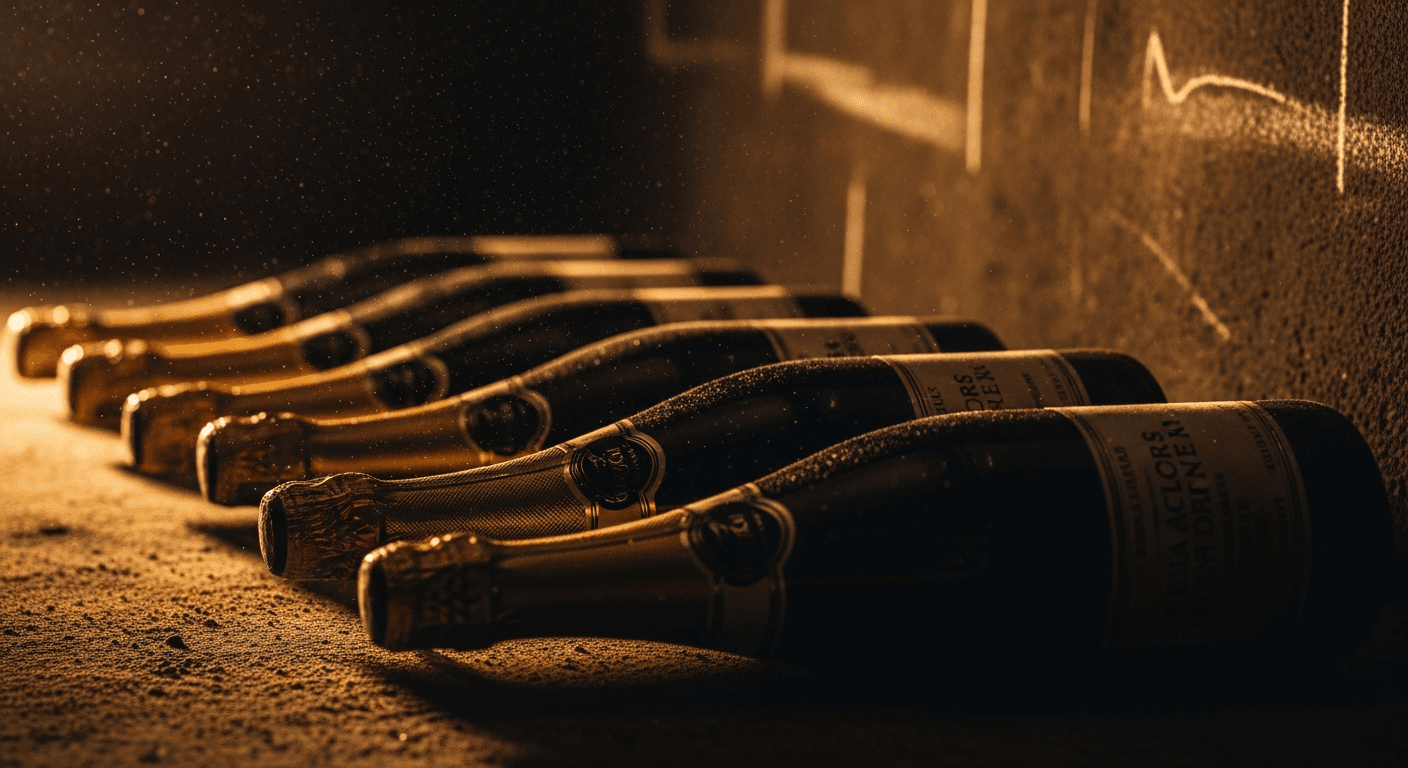
The prevailing narrative of Champagne often centres on the house style, a consistent expression meticulously blended from various years to achieve a recognisable signature. Yet, paradoxically, the most revered wines from this northern French region are those that defy consistency, declaring a single, exceptional year on their label: the Millésime. These vintage Champagnes, produced only when nature bestows optimal ripening conditions, represent a profound departure from the non-vintage norm, offering a snapshot of a unique growing season.
Champagne's marginal climate, influenced by both oceanic and continental weather patterns, means that truly stellar vintages are infrequent, averaging perhaps three times a decade. The delicate balance between acidity and sugar, pivotal for crafting age-worthy sparkling wine, is attained only when sunshine and rainfall align perfectly, allowing grapes to develop complex flavours while retaining their inherent freshness. A Millésime is a testament to both nature's generosity and the Chef de Caves' discerning judgement, reserved for years where all three primary grape varieties-Chardonnay, Pinot Noir, and Pinot Meunier-ripen evenly and exceptionally.
Among the earliest and most fabled is the 1928 vintage, a year that solidified Champagne's reputation for longevity. Hailed by experts like Serena Sutcliffe MW as 'one of the greatest Champagnes ever made', a 750 ml bottle of 1928 Krug once fetched HK$164,560 at auction in 2009. Other notable houses, including Louis Roederer, Moët & Chandon, and Pol Roger, also produced extraordinary wines in 1928, demonstrating remarkable aromatic complexity and firm acidity that allowed them to mature for decades. This vintage showcased the profound depth and structural integrity Champagne could achieve, setting a benchmark for future generations.
Moving forward several decades, the 1990 vintage emerged as a true 'golden era' for Champagne, widely considered one of the best in the latter half of the 20th century. Despite early spring frosts in April, a prolonged, hot, and dry summer led to a generous harvest of well-balanced, ripe fruit. The resulting wines possessed remarkable richness, concentration, and a powerful structure, often characterised by high acidity that contributed to their impeccable balance and substantial ageing potential. Dom Pérignon 1990, Cristal 1990, and Krug 1990 are examples of Cuvées from this year that remain highly sought after by collectors.
Modern Benchmarks
The 2002 vintage stands as a modern benchmark, widely regarded as one of the finest Champagne years of the new century. Following a cold, frosty winter, a mild late spring facilitated a successful flowering, leading into a warm summer with dry, sunny days that ripened grapes without burning them. These near-ideal conditions yielded wines of exceptional balance, precision, and the capacity for extended cellaring. Critics praised the 2002s for their opulent fruit, keen acidity, and concentrated character, with wines like Dom Pérignon 2002, Cristal 2002, and Bollinger La Grande Année 2002 being particularly celebrated.
The Contemporary Classic
More recently, the 2008 vintage has garnered almost universal acclaim, frequently compared to the legendary 1996 for its exceptional natural acidity and structural precision. The growing season presented challenges with a cool, wet spring, yet a subsequent summer with ample sunshine and warmth allowed for slow, even grape development. Crucially, cool nights helped retain the grapes' vibrant acidity, which is essential for structured and long-lived Champagnes. Harvesting began in early September under favourable conditions, producing wines known for their elegance, freshness, and complexity, exhibiting notes of citrus, brioche, and minerality. Dom Pérignon 2008 and Krug Brut 2008 are among the highly rated expressions, predicted to age gracefully until 2050 or beyond.
These Millésime years, from the pre-war elegance of 1928 to the contemporary classicism of 2008, underscore the profound impact of a single growing season on Champagne's character. They are not merely older wines but distinct expressions, each telling a climatic story of abundance or challenge overcome. For the discerning member of Sparkling Book Club, seeking out these vintage expressions offers a unique opportunity to explore the pinnacle of Champagne's artistry and the enduring dialogue between terroir and time. Experiencing a 1.5 L Magnum of a well-aged Millésime, with its evolved tertiary aromas of toast, almond, and honey, provides an unparalleled insight into the profound depths this noble wine can attain, far beyond the consistent freshness of a non-vintage Brut.
More from the cellar.
Bottle Shock: The Unseen Travail of Transported Wine
Unravelling the debate: does wine truly need repose after its journey?
Tasmania's Ascendant Sparkling Wines
Australia's cool-climate island is redefining premium Méthode Traditionnelle.
Non-Vintage: A Cellar Master's Legacy
Behind Champagne's enduring house style lies the profound skill of its guardian.