Beyond the Toast: Sparkling Wine's Gastronomic Versatility
Discover how the effervescent charm of sparkling wine elevates diverse culinary experiences.
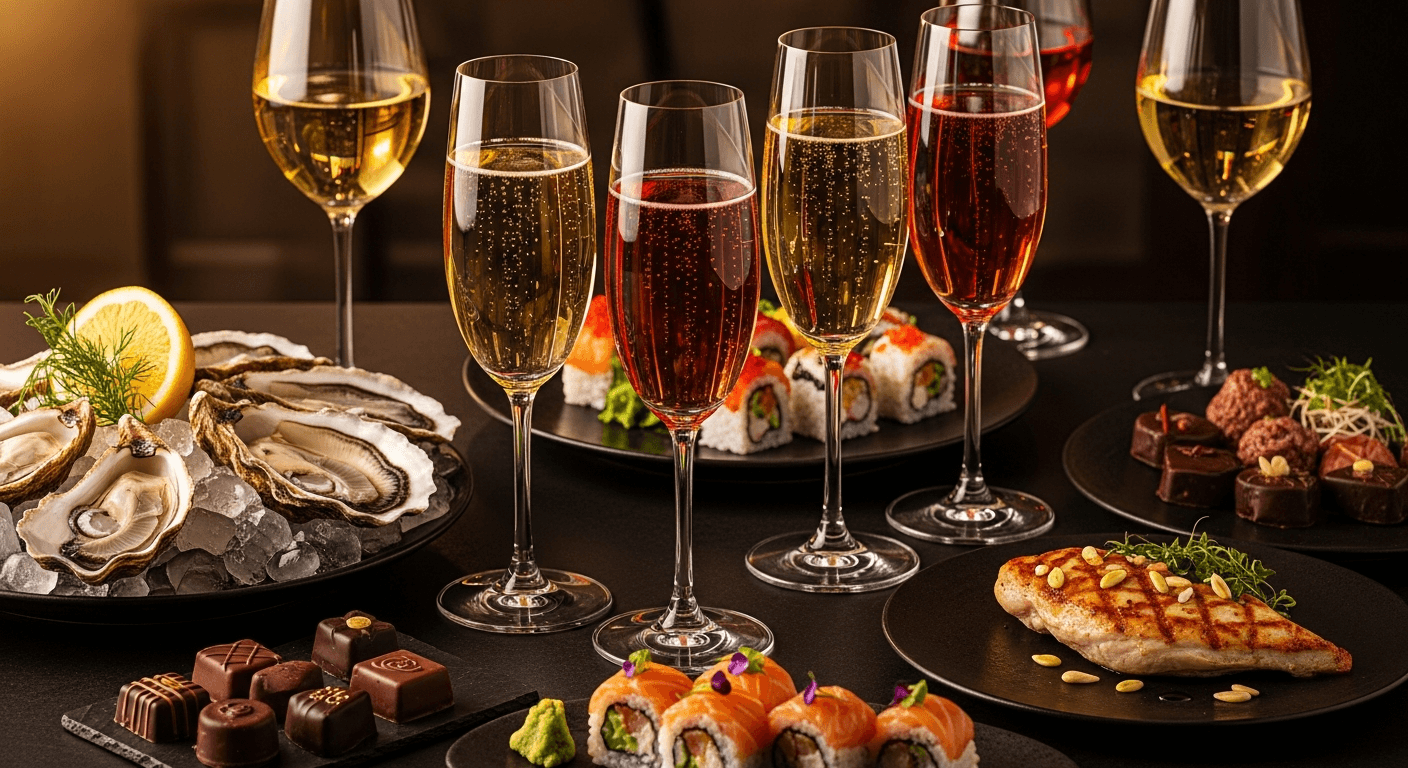
The flute of sparkling wine, so often uncorked for moments of joyous celebration, frequently remains confined to its ceremonial role. Yet, to relegate these effervescent wines solely to toasts is to overlook their profound potential at the dining table. With its inherent acidity, intricate aromatics, and invigorating mousse, sparkling wine is arguably one of the most versatile companions for a vast array of cuisines, capable of transforming a simple meal into an extraordinary sensory event. Indeed, Champagne's adaptability makes it easier to pair with food than many still wines.
Few pairings are as revered, or as scientifically validated, as that of sparkling wine and oysters. The crisp salinity of a freshly shucked oyster finds its perfect counterpoint in the vibrant acidity and minerality of a Brut Nature or Extra Brut Champagne. Researchers in Copenhagen have even identified an 'umami synergy' between oysters and sparkling wines, where amino acids from the shellfish combine with glutamates from the wine, creating an enhanced flavour profile. A bone-dry Crémant de Bourgogne or a precise Cava Brut Nature also offers the requisite verve, cleansing the palate with each briny mouthful and preparing it for the next.
The Art of Savoury Pairings
Moving eastward, the delicate, often umami-rich world of sushi presents another compelling canvas for sparkling wine. While traditionalists might reach for sake, top sushi establishments in Tokyo frequently champion Brut or Blanc de Blancs Champagne, recognising its fine bubbles, minerality, and freshness as ideal complements to Japanese textures and flavours. The high acidity in a quality sparkling wine acts as a palate cleanser, cutting through the richness of fatty fish like toro and enhancing the subtle nuances of white fish sashimi. For instance, Laurent-Perrier's Ultra Brut, a non-dosage Champagne, is noted for its purity, making it an exceptional match for sea bream or scallops. Italian Franciacorta, with its complexity, also stands as a quality alternative to Champagne for sushi pairings.
Chicken, in its myriad preparations, also finds a surprisingly harmonious partner in sparkling wine. While a simple roast chicken can pair beautifully with a versatile Brut Champagne, it is perhaps with fried chicken that sparkling wine truly shines. The high acidity and effervescence of a dry sparkling wine, such as a crisp Cava or a traditional Méthode Champenoise Brut, brilliantly cut through the richness and oiliness of fried coatings, refreshing the palate with each bite. For leaner preparations, like a chicken fillet with herb butter, an English sparkling wine, such as Hambledon Vineyard's Chardonnay-led Classic Cuvée, provides citrus notes and a refreshing acidity that complements the dish without overwhelming it.
Navigating Sweet Sensations
Chocolate, often considered a challenging partner for wine, can also find its match in the diverse spectrum of sparkling wines, provided the pairing principles are carefully observed. The fundamental rule dictates that the wine must always be sweeter than the chocolate to avoid the wine tasting sour or bitter. For white chocolate, with its creamy texture and vanilla notes, a sweet sparkling Moscato d'Asti or a Demi-Sec Champagne, typically containing 33-50 g/l of sugar, provides a harmonious balance. Milk chocolate, with its caramel and milky undertones, often pairs well with a fruity sparkling Rosé, where red berry notes can elevate its gentle character. Even dark chocolate can be paired, though with greater caution, with a Demi-Sec Champagne, allowing the wine's sweetness to soften the cocoa's bitterness.
The enduring success of sparkling wine in gastronomy stems from its core characteristics: pronounced acidity, lively effervescence, and a spectrum of Dosage levels. The acidity acts as a natural cleanser, refreshing the palate and enhancing subsequent bites, while the bubbles provide a textural contrast that can enliven rich or creamy dishes. The specific Dosage-the amount of sugar added after disgorgement-allows for a tailored approach, from the bone-dry Brut Nature to the lusciously sweet Doux, ensuring a sparkling wine exists for nearly every culinary creation.
To fully appreciate the breadth of sparkling wine's culinary prowess, one must venture beyond the celebratory pop of a cork. Seek out an Extra Brut with a platter of fresh oysters, or perhaps a Blanc de Blancs Cuvée alongside delicate sushi. Consider a vibrant Crémant with fried chicken or a Demi-Sec with a thoughtfully chosen dark chocolate. The true luxury of sparkling wine lies not just in its sparkle, but in its unparalleled ability to elevate the flavours and textures of food, transforming ordinary meals into memorable dining experiences. It is an invitation to explore, to experiment, and to discover the profound connections between the glass and the plate.
More from the cellar.
Bottle Shock: The Unseen Travail of Transported Wine
Unravelling the debate: does wine truly need repose after its journey?
Tasmania's Ascendant Sparkling Wines
Australia's cool-climate island is redefining premium Méthode Traditionnelle.
Non-Vintage: A Cellar Master's Legacy
Behind Champagne's enduring house style lies the profound skill of its guardian.