Tasmania's Ascendant Sparkling Wines
Australia's cool-climate island is redefining premium Méthode Traditionnelle.
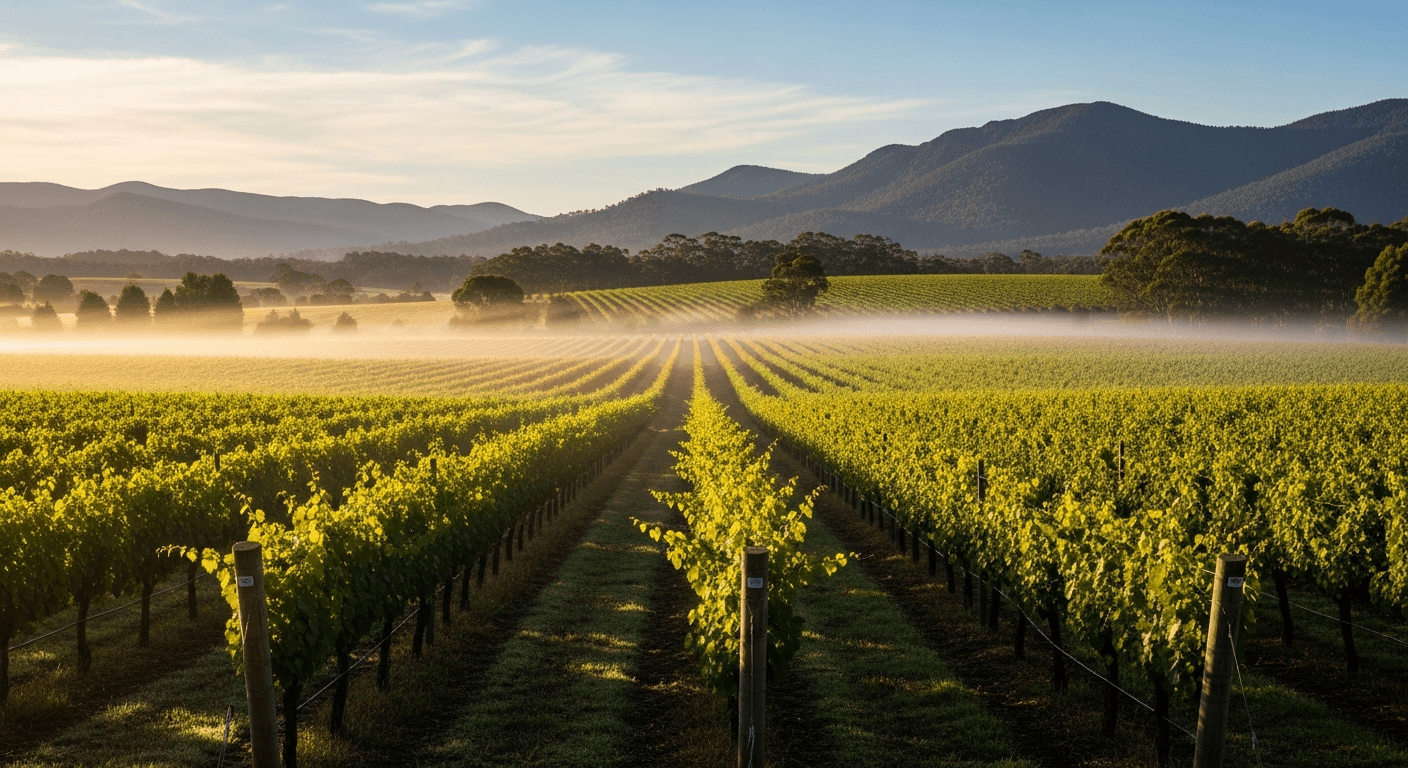
For decades, Australia's wine identity has been largely shaped by its sun-drenched, warmer regions, yielding powerful Shiraz and opulent Chardonnay. Yet, nestled below the mainland, the island of Tasmania, or Lutruwita in the palawa kani language, presents a compelling counter-narrative, quietly forging a reputation for sparkling wines that stand shoulder-to-shoulder with the world's finest. This small state, contributing a mere 1.2% of Australia's national grape crush by volume, astonishingly accounts for 6.1% of the value, with sparkling wine comprising over 40% of its total wine production.
Tasmania's unparalleled advantage lies in its cool temperate maritime climate, a viticultural sweet spot between 40° and 43° south latitude. Unlike much of the continent, the island benefits from the moderating influence of the Southern Ocean, with prevailing westerly winds creating a long, gentle ripening season. This extended hang time allows grapes to develop complex flavour profiles while retaining the crisp natural acidity vital for balanced sparkling wines. The mean January temperature of 15.6 °C further underscores its cool-climate credentials, providing conditions analogous to esteemed European regions like Champagne.
The island's winemaking history, though initially intermittent, traces back to 1823 with the planting of its first recorded vineyard, and Australia's first sparkling wine was produced in Tasmania in 1826. However, the modern revival gained significant momentum in the 1950s, propelled by French and Italian immigrants who recognised the climate and soils' suitability for classic sparkling varieties. A pivotal moment arrived in 1989 with the release of the Jansz Traditional Method Sparkling, a ground-breaking collaboration between Heemskerk winery and the French Champagne house Louis Roederer, solidifying Tasmania's commitment to Méthode Traditionnelle.
At the heart of Tasmanian sparkling wine are the noble grape varieties: Pinot Noir, Chardonnay, and, to a lesser extent, Pinot Meunier. Pinot Noir accounts for approximately 44% of the island's vine plantings, with Chardonnay making up 23%. These grapes are meticulously hand-harvested and subjected to the rigorous Méthode Traditionnelle, involving a secondary fermentation in the bottle. This labour-intensive process is complemented by extended ageing on lees, often for several years, which imparts desirable complexity, texture, and a creamy mouthfeel, moving beyond simple fruit expression to notes of brioche and almond.
The resulting wines are celebrated for their distinctive style: a vibrant tension and precision, characterised by razor-clean acidity and a fine, persistent mousse. Flavours typically range from crisp green apple and lemon peel to white peach and subtle red berry notes from the Pinot Noir, often underpinned by a chalky or saline minerality. Producers frequently employ a low Dosage, allowing the purity of the cool-climate fruit and the intricacies developed during extended lees contact to shine through, creating wines of remarkable elegance and longevity.
Tasmanian sparkling wines have garnered significant international acclaim, with producers consistently winning top accolades. Ed Carr, Chief Winemaker at House of Arras, founded in 1995, was named Sparkling Winemaker of the Year at the 2024 International Wine Challenge, marking only the second time in the competition's 40-year history that a winemaker outside of Champagne received the award. His E.J. Carr Late Disgorged 2004 was previously named the world's best sparkling wine by Decanter. Similarly, Pirie Sparkling Late Disgorged 2011 was honoured with both Wine of Show and Best Sparkling Wine titles at the Global Fine Wine Challenge. The consistent quality was further demonstrated when Tasmanian wines swept all four major trophies at the 2025 Australian Sparkling Wine Show. Even Maison Mumm launched a Mumm Tasmania Brut Prestige in 2022, recognising the region's escalating prestige.
For the discerning palate, Tasmania offers a compelling exploration into premium sparkling wine. Seek out a Vintage Cuvée from a celebrated producer like Jansz, House of Arras, or Delamere, noting the nuances that extended tirage ageing brings. Look for the declaration 'Méthode Traditionnelle' on the label as a hallmark of quality and craftsmanship. These wines are not merely alternatives to established giants; they represent a distinct expression of terroir, offering elegance, depth, and a vibrant acidity that makes them exceptionally versatile at the table. To overlook Tasmania's sparkling output is to miss a crucial chapter in the ongoing narrative of global fine wine.
More from the cellar.
Bottle Shock: The Unseen Travail of Transported Wine
Unravelling the debate: does wine truly need repose after its journey?
Non-Vintage: A Cellar Master's Legacy
Behind Champagne's enduring house style lies the profound skill of its guardian.
Aube's Ascent: Champagne's Southern Frontier
Once overlooked, this distinct southern region now drives Champagne's most dynamic shifts.