Non-Vintage: A Cellar Master's Legacy
Behind Champagne's enduring house style lies the profound skill of its guardian.
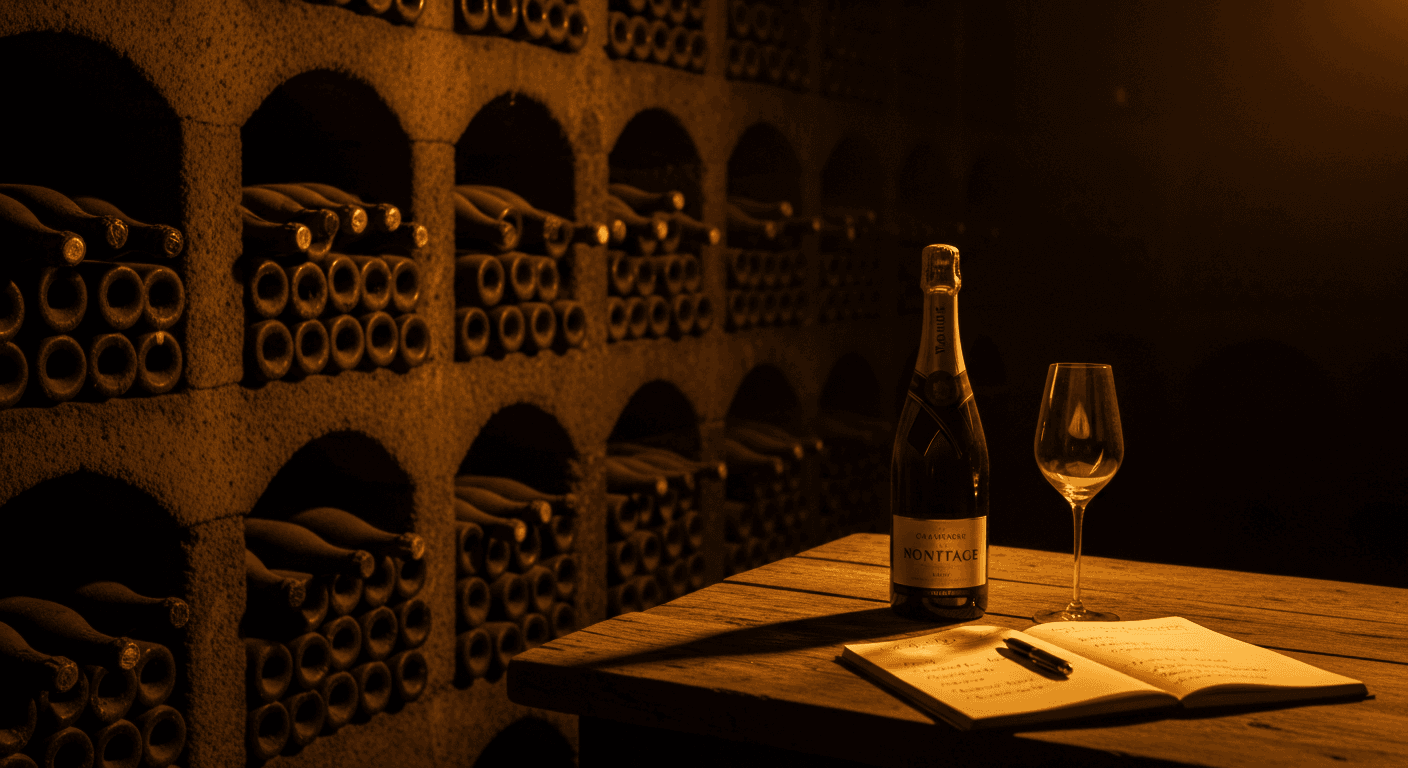
The notion of consistency in wine is often viewed with suspicion by enthusiasts who prize vintage variation and the singular expression of a harvest. Yet, in Champagne, the non-vintage Brut Cuvée, accounting for approximately 75-90% of all Champagne shipped globally, stands as the very emblem of a house's identity and unwavering quality. This seemingly paradoxical steadfastness in a region defined by capricious weather is not an accident of nature, but the meticulous, often decades-long artistry of the cellar master, the true guardian of a house's signature style. It is a craft honed since the 19th century, when figures such as Louise Pommery pioneered the Brut style in 1874, responding to evolving palates.
At the heart of this enduring consistency lies the Chef de Cave, or cellar master, whose role is akin to a composer, orchestrating a symphony of wines to reproduce a familiar melody year after year. This is a particularly demanding task in a region historically prone to climatic challenges, where grapes did not always achieve optimal ripeness. The cellar master must skillfully mitigate the vagaries of nature, ensuring that a bottle purchased today tastes recognisably similar to one enjoyed a decade ago. Their expertise spans every stage of production, from overseeing fermentation to rigorous chemical analyses and temperature control, ensuring optimal wine development.
Central to this art is the judicious use of vins de réserve-reserve wines-still wines held back from previous harvests. These liquid libraries are invaluable for blending, imparting richness, roundness, depth, and a mellowed complexity that allows younger Champagnes to be approachable and balanced. The proportion of reserve wines can vary significantly, from 10% to 50% of the final blend, depending on the desired house style. For instance, Charles Heidsieck's Brut Réserve famously incorporates as much as 40% reserve wines, with some components aged for an average of 10 years. Similarly, Bollinger's Special Cuvée can feature around 50-60% reserve wines, some of which are aged for 5-15 years in Magnum bottles, contributing to its distinctive vinous character.
The physical storage of these precious reserves varies considerably among houses, each method contributing to the final aromatic profile. While some producers, like Perrier-Jouët and Veuve Clicquot, opt for inert stainless steel tanks to preserve freshness and limit oxidation, others, such as Louis Roederer, utilise large oak foudres, which impart a gentle oxidative nuance, making the wines rounder and softer over time. Bollinger is notable for storing individual years, villages, and grape varieties in over 750,000 Magnums under cork, a technique that maintains remarkable freshness. This extensive collection provides the cellar master with an unparalleled palette of flavours and textures to draw upon during the blending process.
The Assemblage: A Masterful Composition
The blending, or assemblage, is where the cellar master's genius truly manifests. It is a delicate art involving the combination of hundreds of vins clairs-base wines-from different grape varieties, vineyard parcels (crus), and vintages. A house like Louis Roederer or Veuve Clicquot might work with several hundred base wines, each contributing its unique characteristics. Chardonnay offers finesse, citrus, and acidity; Pinot Noir provides body and red fruit notes; and Meunier contributes fruitiness and roundness, making the wine more accessible in its youth. The cellar master, often supported by a dedicated team, spends weeks in January meticulously tasting and combining these components, sometimes trying as many as nine different permutations to achieve the desired harmony and balance.
The Evolving Face of Non-Vintage
In recent decades, the concept of non-vintage Champagne has seen a subtle yet significant evolution, partly in response to climate change. Historically, NV blends were designed to 'correct' less favourable years, ensuring ripeness was achieved. However, with warmer climates leading to riper fruit, the challenge has shifted to maintaining freshness and vibrancy. This has prompted some houses to embrace a "multi-vintage" (MV) or "numbered cuvée" approach, moving away from strict year-on-year identical consistency towards expressing the best possible wine from a given base vintage, while retaining house identity. Louis Roederer, for example, replaced its Brut Premier with the Collection series in 2021, with cellar master Jean-Baptiste Lécaillon describing the former as 'corrective' and the latter as 'the story of the new Champagne'. This Collection incorporates a perpetual reserve system, initiated in 2012, containing a blend of Pinot Noir and Chardonnay kept at a cool 12 °C in large tanks, adding layers of freshness and complexity.
This intricate dedication to crafting a consistent yet evolving house style is what sets non-vintage Champagne apart. The legal minimum aging for NV Champagne is 15 months, with at least 12 months on its lees, though many top houses voluntarily extend this to two or three years for added complexity. The next time a glass of non-vintage Champagne is raised, consider the profound skill, foresight, and dedication of the cellar master, whose invisible hand has shaped that liquid art over years, even decades. It is a testament to consistency as a form of art, not merely a commercial imperative, inviting a deeper appreciation for the nuanced craft within every single bottle.
More from the cellar.
Bottle Shock: The Unseen Travail of Transported Wine
Unravelling the debate: does wine truly need repose after its journey?
Tasmania's Ascendant Sparkling Wines
Australia's cool-climate island is redefining premium Méthode Traditionnelle.
Aube's Ascent: Champagne's Southern Frontier
Once overlooked, this distinct southern region now drives Champagne's most dynamic shifts.