Salon's Singular Pursuit of Perfection
Le Mesnil-sur-Oger, Chardonnay, and the unwavering vintage dedication.
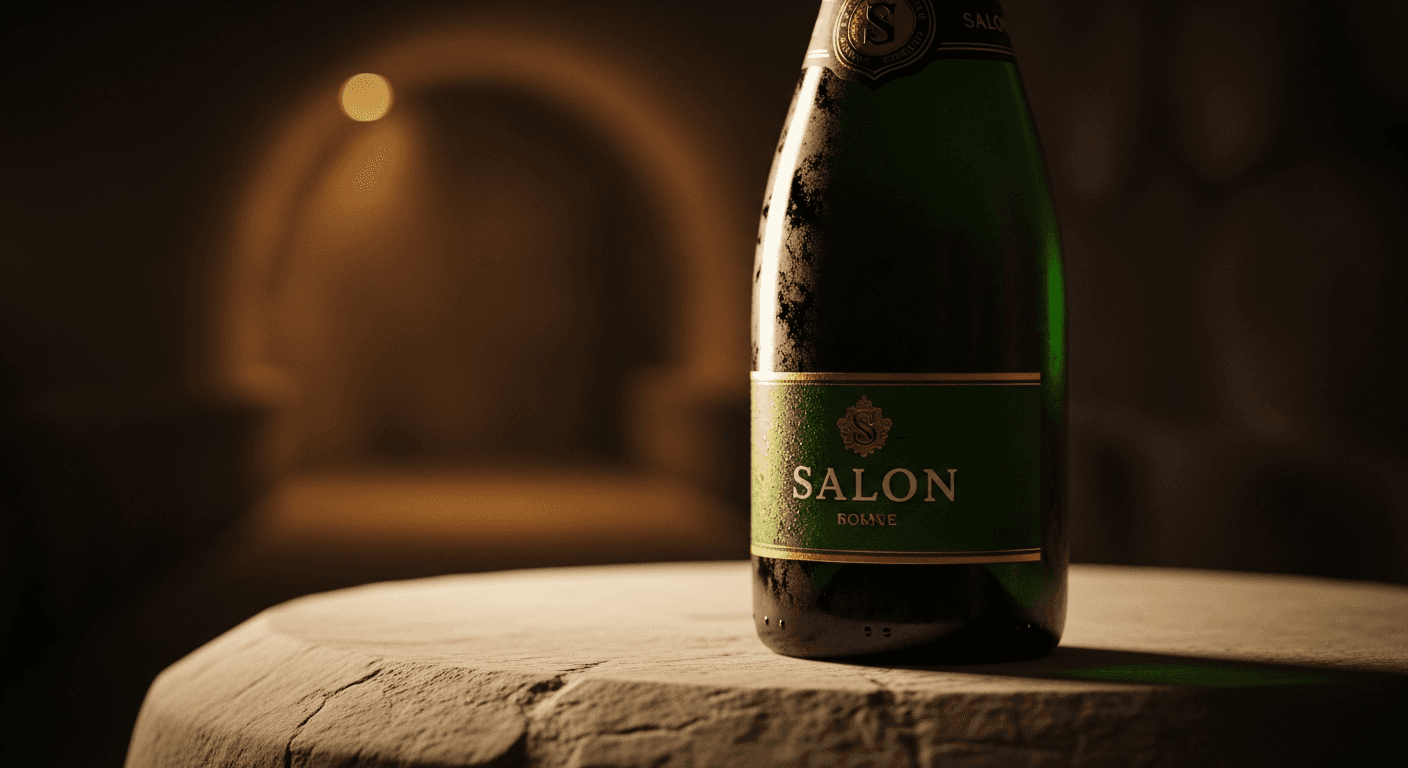
In a region renowned for the art of assemblage, where blending diverse grape varieties, vineyards, and vintages is the very bedrock of house style, one Champagne stands apart through an almost monastic devotion to singularity. Champagne Salon, established in the early 20th century by Eugène-Aimé Salon, was conceived not as a commercial venture, but as a personal quest for an unparalleled Blanc de Blancs. His radical vision, first realised with the 1905 vintage, was to create a wine solely from Chardonnay grapes, sourced from a single village, and produced only in years deemed exceptional- a philosophy that remains steadfast over a century later.
At the heart of this uncompromising approach lies Le Mesnil-sur-Oger, a Grand Cru village nestled within the revered Côte des Blancs. This specific terroir is celebrated for its shallow topsoil overlaying deep layers of belemnite chalk, a geological feature that imparts profound minerality and a distinctive, searing acidity to the Chardonnay grapes grown there. Eugène-Aimé Salon meticulously selected 19 small plots within this village, alongside his own one-hectare 'Jardin de Salon', to provide the exclusive fruit for his Cuvée 'S'. This precise sourcing ensures a consistent expression of Le Mesnil-sur-Oger's unique character.
At a time when Chardonnay was often considered a lesser partner to Pinot Noir and Pinot Meunier in Champagne blends, Salon championed the pure expression of the white grape. Eugène-Aimé Salon believed firmly in Chardonnay's inherent finesse and, crucially, its capacity for extraordinary longevity and development when cultivated in the right conditions. This pioneering commitment to 100% Chardonnay-based Champagne- known as Blanc de Blancs- was a bold departure from convention, proving that a single varietal could achieve complexity and grandeur rivaling, or even surpassing, traditional blends.
Perhaps the most defining aspect of Salon's "monomania" is its unwavering commitment to producing Champagne only in exceptional vintages. Since its debut in 1905, only around 45 vintages have been released to date, with just 37 appearing throughout the entire 20th century. This extreme selectivity means that many years, even those acclaimed for Champagne production generally, are skipped if the grapes do not meet Salon's exacting standards for ripeness, balance, and aging potential. For instance, the otherwise lauded 1989 vintage was not produced due to concerns about low acidity. In years when Salon is not declared, the grapes are often used for its sister house, Champagne Delamotte, or sold off.
The vinification process further underscores this pursuit of purity and patience. The grapes undergo gentle pressing, and fermentation takes place in stainless steel tanks. Crucially, Salon's base wines typically forgo malolactic fermentation, a decision made to preserve the naturally high acidity and taut structure derived from the Le Mesnil terroir, which are vital for the wine's exceptional aging capability. Following this, the wines undergo an extended period of maturation on their lees, averaging 10 to 12 years in the cellars before disgorgement. This prolonged contact with yeast imparts depth, complexity, and a creamy texture, while a minimal Dosage, typically between 4 and 8 grams per litre, ensures a dry, precise, and unmasked expression of the wine's intrinsic character.
The Philosophy of Focus
This relentless focus- one village, one grape, one vintage- is not merely a marketing conceit; it is the very essence of Salon's identity, driving every decision from vineyard management to release. It ensures that each bottle is a distilled expression of a single, extraordinary year in Le Mesnil-sur-Oger, rather than a harmonised blend designed for consistency across years. The resulting wine is characterised by its distinctive tension, piercing minerality, and notes of citrus, chalk, and flint in its youth. It demands patience, rewarding those who allow it to evolve in bottle for decades, transforming into a wine of remarkable elegance, richness, and nuanced complexity, akin to a Grand Cru Burgundy.
Today, under the stewardship of the Laurent-Perrier group, with Didier Depond as President and Michel Fauconnet as Cellar Master, Salon continues to uphold Eugène-Aimé Salon's legacy. The house's annual production is remarkably limited, often below 60,000 bottles per vintage, further cementing its status as one of the rarest and most coveted Champagnes in the world. This scarcity, combined with its profound quality and unique stylistic integrity, has garnered Salon a near-mythical reputation among connoisseurs and collectors alike.
For those seeking a sparkling wine that transcends mere effervescence to offer a profound reflection of place and time, Salon represents a pinnacle. To experience a bottle is to engage with a century-old dedication to purity and a singular expression of Chardonnay from Le Mesnil-sur-Oger. While often austere in youth, its potential for development is legendary, revealing layers of brioche, toasted nuts, and a captivating salinity that only extended cellar aging can unlock. It is a Champagne that challenges, rewards, and ultimately defines the heights of Blanc de Blancs. Try a younger vintage to appreciate its vibrant tension, or if fortune permits, an older one to witness the breathtaking transformation wrought by time and unwavering conviction.
More from the cellar.
Bottle Shock: The Unseen Travail of Transported Wine
Unravelling the debate: does wine truly need repose after its journey?
Tasmania's Ascendant Sparkling Wines
Australia's cool-climate island is redefining premium Méthode Traditionnelle.
Non-Vintage: A Cellar Master's Legacy
Behind Champagne's enduring house style lies the profound skill of its guardian.