Ruinart: Oldest House, Enduring Artistry
Nearly three centuries of Champagne heritage entwined with profound artistic patronage.
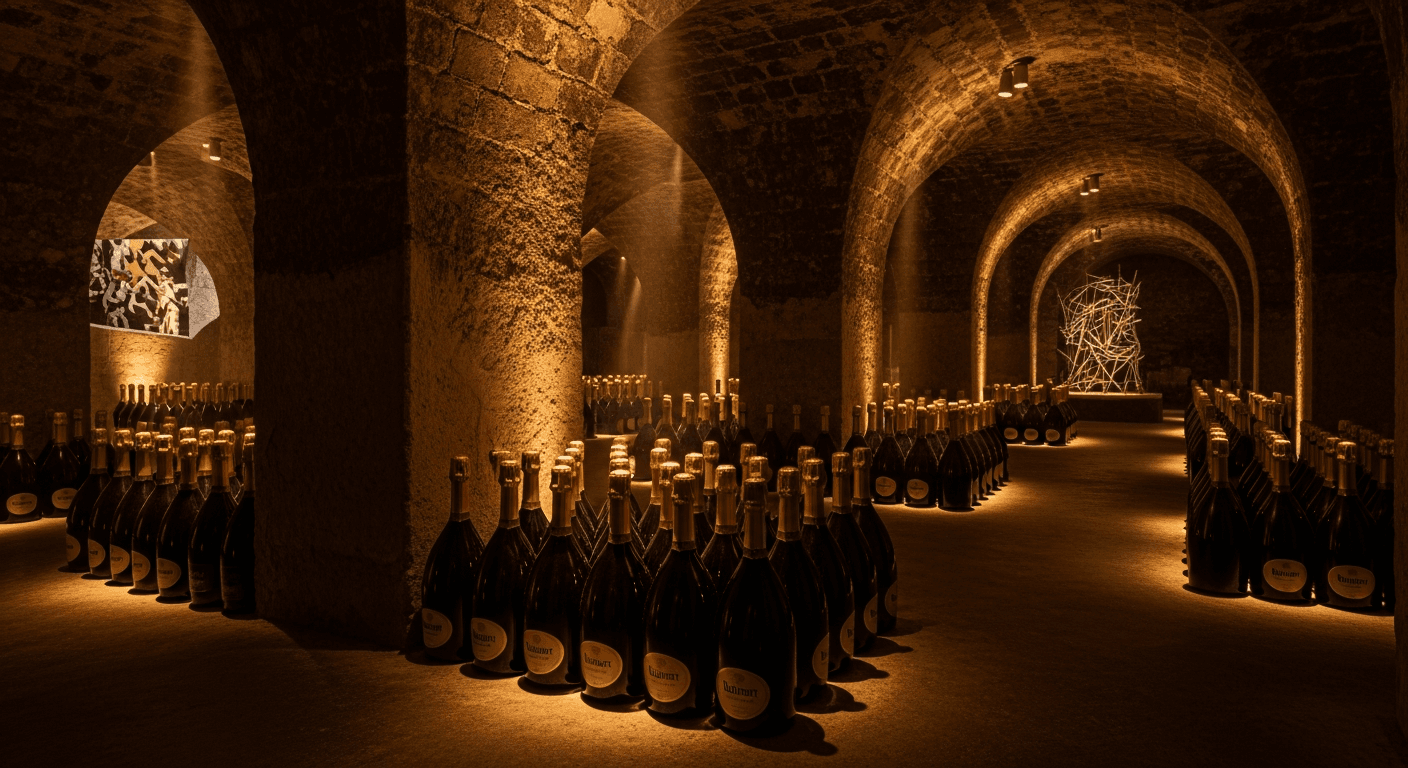
In a region steeped in tradition, where the very term 'Champagne' evokes centuries of meticulous craft, one house stands apart not only for its venerable age but also for a singular, almost contradictory, embrace of the contemporary. Maison Ruinart, established in 1729, holds the distinction of being the first Champagne house, a lineage that might suggest a steadfast adherence to the past. Yet, alongside its historic cellars and Chardonnay-centric style, Ruinart has cultivated an equally profound legacy as a patron of the arts, funding innovative projects that often challenge and reflect upon the very essence of its terroir and existence. This dual identity-rooted in history, yet persistently forward-looking through art-defines Ruinart's enduring relevance.
The genesis of Ruinart dates back to 1 September 1729, when Nicolas Ruinart founded the house in Reims. The inspiration for this pioneering venture came from his uncle, Dom Thierry Ruinart, a scholarly Benedictine monk and contemporary of Dom Pérignon, who observed the burgeoning enthusiasm for 'wine with bubbles' among the Parisian aristocracy. Initially, Nicolas Ruinart integrated Champagne sales with his family's established textile business. However, the burgeoning demand, significantly aided by a 1728 royal decree from Louis XV that permitted bottled wine transport, proved overwhelming. By 1735, just six years after its inception, the Maison fully relinquished its textile trade to concentrate exclusively on Champagne production, charting a course that would redefine the region's commercial landscape.
At the heart of Ruinart's vinous identity lies an unwavering dedication to Chardonnay, the noble grape that forms the foundation of its distinctively elegant and fresh style. This commitment is most evident in its iconic Blanc de Blancs Cuvée, crafted solely from Chardonnay grapes sourced predominantly from the Côte des Blancs and Montagne de Reims vineyards. Crucial to the maturation of these exceptional wines are the ancient chalk cellars, or crayères, acquired by the house in 1768. These subterranean labyrinths, extending over 8 kilometres and reaching depths of up to 40 metres, provide ideal, consistent conditions for the slow, transformative ageing process. Designated a French historic monument in 1931, these crayères were further recognised as a UNESCO World Heritage Site in July 2015, underscoring their profound historical and viticultural significance.
Beyond its viticultural prowess, Ruinart's legacy is intricately interwoven with a pioneering spirit in artistic patronage. This commitment solidified as early as 1896, when André Ruinart commissioned the celebrated Czech Art Nouveau illustrator Alphonse Mucha to design a captivating advertising poster. This audacious move was not merely a marketing exercise; it marked a significant moment in the history of luxury brands, establishing Ruinart as one of the first Champagne houses to engage a contemporary artist to articulate its identity. This initial collaboration laid the groundwork for a cultural philosophy that continues to shape the Maison today.
Conversations with Nature
What began with a single poster has evolved into a comprehensive and dynamic programme of artistic collaboration. Since 2008, Ruinart has extended an annual 'Carte Blanche' invitation to renowned contemporary artists, tasking them with creating original works inspired by the house's heritage, its vineyards, and the unique environment of the crayères. These artists, including figures such as Erwin Olaf, Julian Charrière, Jeppe Hein, and Liu Bolin, delve into themes that resonate deeply with Ruinart's values, frequently exploring nature, climate change, and sustainability. For instance, in 2025, Swiss-born artist Julian Charrière contributed to the 'Conversations with Nature' series, offering a poignant meditation on coral and climate through photolithographs tinted with crushed coral and local limestone pigments. Similarly, Jeppe Hein's 2022 installation, 'Right Here, Right Now', engaged visitors' senses through a participatory experience centred on the four elements vital to Champagne production.
A Sustainable Future
This artistic dialogue is not merely aesthetic; it mirrors and amplifies Ruinart's profound commitment to environmental stewardship. The Maison has been at the forefront of sustainable viticulture since the early 2000s, implementing transformative practices across its vineyards. Over the past two decades, Ruinart has achieved a 50% reduction in the use of fertilisers and fungicides, while entirely eliminating herbicides and insecticides. Initiatives include the adoption of electric tractors, extensive agroforestry projects-such as planting 25,000 trees and shrubs in the Taissy vineyard-and the development of eco-designed packaging like the 'Second Skin Case', made from 99% paper. Even the creation of the Blanc Singulier Cuvée directly addresses the impact of climate change on grape growth, demonstrating how environmental responsibility is woven into the very fabric of Ruinart's innovation.
The confluence of a nearly 300-year heritage, a steadfast dedication to Chardonnay, and a vibrant, evolving patronage of the arts positions Ruinart as more than just a Champagne producer. It is a cultural institution, a custodian of history, and a proponent of a sustainable future. When next contemplating a bottle of Ruinart Blanc de Blancs or the venerable Dom Ruinart, consider not only the pale golden hue and delicate effervescence but also the enduring narrative of innovation, artistry, and environmental consciousness that each Cuvée embodies. It is a story told not just in the glass, but through the hands of artists and the dedication to the land itself.
More from the cellar.
Bottle Shock: The Unseen Travail of Transported Wine
Unravelling the debate: does wine truly need repose after its journey?
Tasmania's Ascendant Sparkling Wines
Australia's cool-climate island is redefining premium Méthode Traditionnelle.
Non-Vintage: A Cellar Master's Legacy
Behind Champagne's enduring house style lies the profound skill of its guardian.