Cristal's Clear History: Tsar, Paranoia, and Glass
The iconic clear bottle of Louis Roederer Cristal hides a tale of imperial fear and innovation.
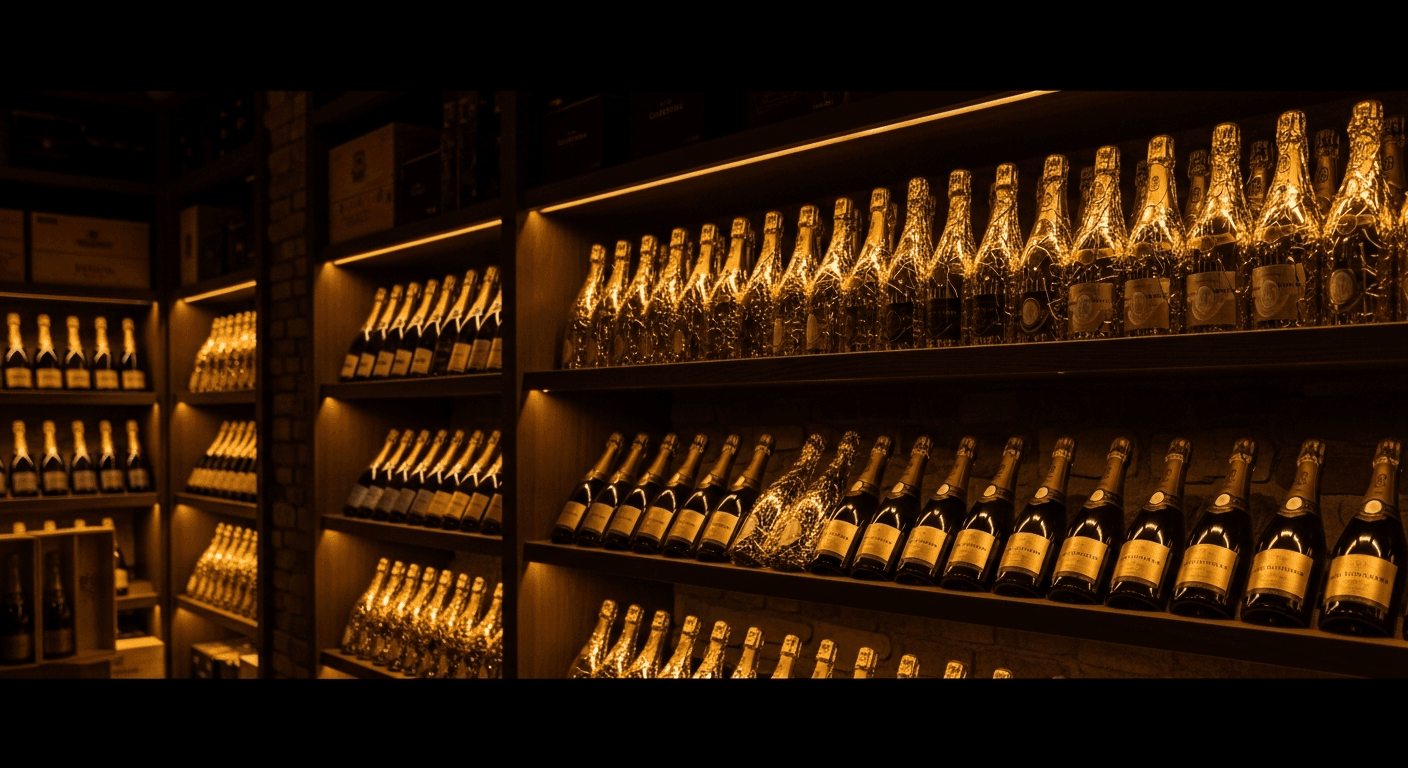
In the opulent yet precarious world of 19th-century Imperial Russia, a monarch's life was often fraught with peril. Tsar Alexander II, known for his discerning palate and particular fondness for Louis Roederer Champagne, lived under the constant shadow of assassination attempts. It was this pervasive sense of threat that, remarkably, led to the creation of one of the world's most distinguished and visually distinctive prestige Cuvées: Cristal. The Tsar's desire for security, even in his celebratory libations, prompted a demand for a truly unique vessel, setting a precedent that still defines luxury sparkling wine today.
Alexander II's fears were not unfounded; he had already survived multiple assassination attempts. His specific request for his favoured Champagne stemmed from a need to visually inspect the contents for poison and to ensure no explosive devices could be concealed beneath the bottle. At a lavish dinner in Paris in 1867, he reportedly stipulated that his Champagne be served in clear, flat-bottomed bottles. This informal request was formalised for his special Cuvée, which Louis Roederer was commissioned to produce in 1876.
Responding to the Tsar's extraordinary demands, Louis Roederer engaged a Flemish glassmaker to craft a bespoke bottle. This innovative design featured clear lead crystal glass and, crucially, a flat base, eliminating the traditional punt where an explosive might be hidden. The resulting Champagne was named 'Cristal' after this precious, transparent material, marking it as the world's first true prestige Cuvée. For decades, this exceptional wine remained the exclusive preserve of the Russian Imperial Court, a potent symbol of luxury and power.
The meticulousness of Cristal extends far beyond its distinctive packaging. It is a vintage Champagne, produced only in years deemed exceptional when the Pinot Noir (typically around 60%) and Chardonnay (around 40%) grapes achieve optimal maturity. These grapes are sourced from 45 specific Grand Cru plots, spanning approximately 80 hectares, all owned by Louis Roederer. The wine undergoes a prolonged ageing process of six years on its lies in the cellars, followed by a further eight months after dégorgement. Louis Roederer has also embraced biodynamic farming for all Cristal vintages since 2012, further underscoring a commitment to purity and terroir expression, with a notable absence of malolactic fermentation.
Ironically, the very transparency that once assured a Tsar of his safety presents a challenge for wine preservation today. Clear glass bottles offer minimal protection against 'lightstrike', a fault caused by exposure to blue and ultraviolet light, which can degrade a wine's delicate aromas and flavours. To mitigate this, every bottle of Cristal is wrapped in an anti-UV, golden-orange cellophane wrapper, a necessary safeguard that protects the liquid from harmful rays until the moment of consumption. This practical measure ensures the wine's integrity, maintaining the complex aromatic profile that includes notes of ripe fruits, white flowers, and subtle brioche.
Cristal's journey from an imperial commission to a global icon saw it become commercially available only in 1945, after the Russian Revolution ended the reign of the Tsars. Despite this wider release, it remains a rare commodity, with an annual production of approximately 300,000 to 400,000 bottles, significantly less than other leading prestige Cuvées. The house of Louis Roederer continues to be family-owned, with Frédéric Rouzaud representing the seventh generation, upholding the exacting standards established by his predecessors. This dedication to quality, independence, and historical continuity reinforces Cristal's position as a benchmark for excellence.
Today, the unique clear, flat-bottomed bottle, originally born from imperial paranoia, serves as a tangible link to a rich history, a testament to bespoke craftsmanship and unwavering quality. To appreciate Cristal is to acknowledge not only its remarkable sensory profile-its silky texture, powerful minerality, and elegant length-but also the extraordinary narrative woven into its very design. It is an invitation to engage with a legacy where security concerns of a bygone era sculpted the form of enduring luxury, reminding us that even the most refined pleasures often carry profound, unexpected stories.
More from the cellar.
Bottle Shock: The Unseen Travail of Transported Wine
Unravelling the debate: does wine truly need repose after its journey?
Tasmania's Ascendant Sparkling Wines
Australia's cool-climate island is redefining premium Méthode Traditionnelle.
Non-Vintage: A Cellar Master's Legacy
Behind Champagne's enduring house style lies the profound skill of its guardian.