Madame Pommery and the Brut Revolution
The audacious decision that transformed Champagne from sweet indulgence to refined elegance.
Imagine a world where Champagne, the very symbol of effervescence and celebration, was almost universally cloying. For centuries, the sparkling wines of the Champagne region were crafted with substantial sweetness, often perceived as necessary to mask the raw acidity of the grapes. Yet, in 1874, a visionary woman, Madame Louise Pommery, defied this established norm, introducing a radically drier style that would fundamentally reshape the global palate for sparkling wine. Her audacious move forever altered the trajectory of Champagne, shifting it from a saccharine dessert wine to the crisp, elegant Brut we recognise today.
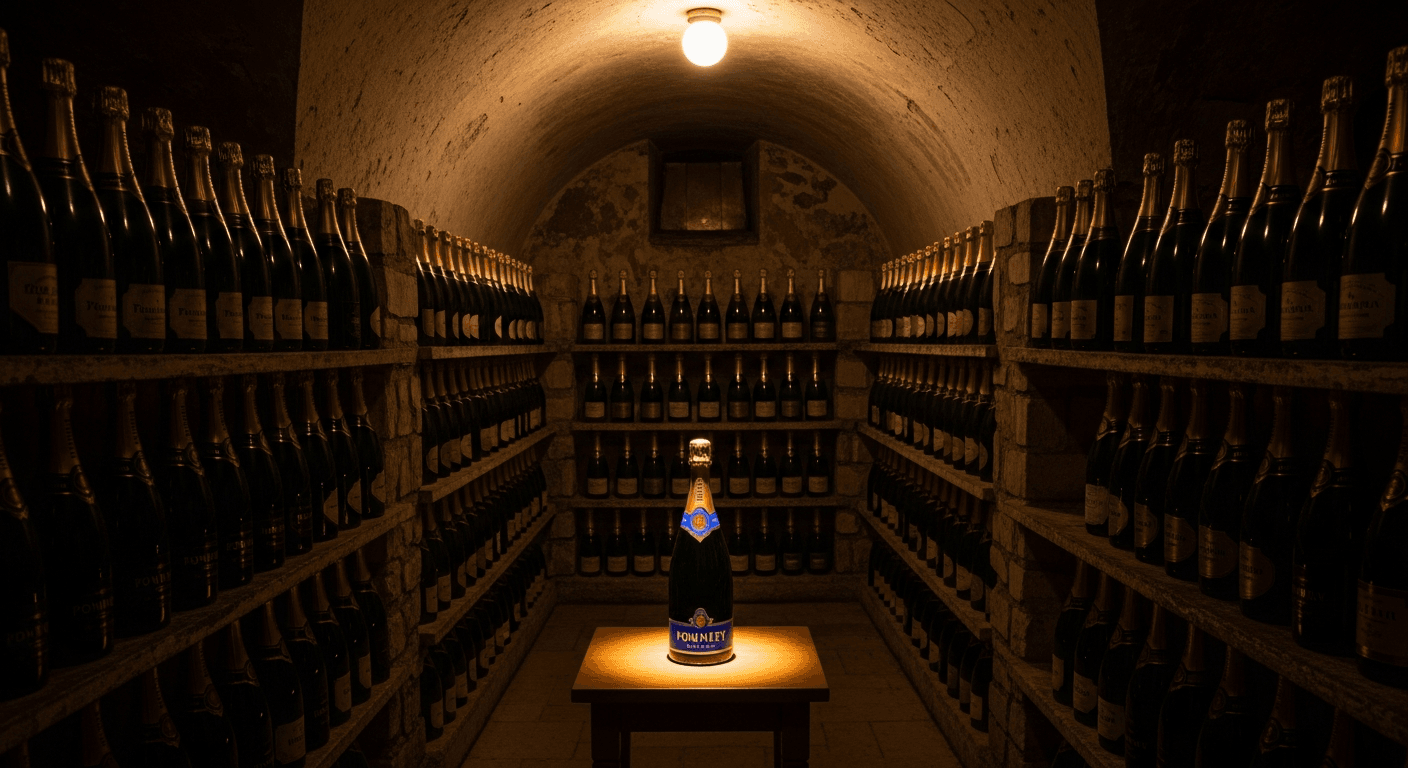
Born Jeanne Alexandrine Louise Mélin, Madame Pommery assumed control of Pommery & Greno in 1860 following the untimely death of her husband, Alexandre Louis Pommery. The business, originally focused on wool trading, was quickly redirected by Madame Pommery towards Champagne production, driven by a relentless pursuit of quality. She meticulously built up one of the finest vineyard holdings in Champagne and, notably, acquired 120 Roman-era chalk pits, known as crayères, beneath Reims, which she transformed into 18 kilometres of ideal cellaring space maintaining a constant 10 °C.
Prior to her intervention, the global preference for Champagne leaned heavily towards the sweet. Russian consumers, for instance, favoured wines with an astonishing 250-330 grams of sugar per litre, while even the English, who were considered to prefer drier styles, typically consumed Champagne with 22-66 grams of sugar per litre. This significant dosage of sugar was not merely a matter of taste; it was often employed to balance the high acidity inherent in Champagne grapes and to compensate for less refined winemaking techniques of the era. The prevailing styles were Demi-Sec and even sweeter Doux, far removed from the dry wines that would later dominate the market.
It was the discerning English market, however, with its developing preference for less sweetness, that catalysed Madame Pommery's pivotal innovation. She famously instructed her cellar master, Victor Lambert, "Damas, we need a wine that is as dry as possible, but without rigidity... It should be soft and velvety on the palate... Above all, make sure it has finesse." The result was Pommery Nature, released in 1874, the first commercially successful Brut Champagne. This pioneering Cuvée contained significantly less sugar than its predecessors, a revolutionary act that was initially met with scepticism but swiftly gained unprecedented success.
The shift to Brut involved a radical re-evaluation of the dosage, the final addition of a sugar-and-wine mixture after disgorgement. Traditionally, this step heavily influenced the Champagne's sweetness level. A Brut Champagne, by modern definition, contains less than 12 grams of residual sugar per litre, with Extra Brut containing even less (0-6 g/L) and Brut Nature (or Brut Zéro) having virtually no added sugar (0-3 g/L). Madame Pommery's foresight in reducing this sugar content allowed the inherent purity and character of the grapes-Chardonnay, Pinot Noir, and Pinot Meunier-to express themselves with greater clarity and elegance, revealing the true essence of the terroir.
Madame Pommery's impact extended beyond this stylistic revolution. She was a trailblazing businesswoman, developing sophisticated brand image and public relations strategies. She also pioneered wine tourism, constructing an elaborate English-style chateau in Reims to welcome visitors, a direct nod to her crucial English clientele. Upon her death in 1890, her immense contributions to the city and the Champagne industry were recognised with the first state funeral ever accorded to a French woman.
Today, the legacy of Madame Pommery is omnipresent in the world of Champagne. The Brut style now accounts for approximately 92% of all Champagne produced, a testament to her enduring influence. Champagne Pommery continues to honour her pioneering spirit, with its prestigious Cuvée Louise named in her memory. In 2024, the house marked the 150th anniversary of this groundbreaking achievement with the release of its Apanage Brut 1874, a modern interpretation of the original dry style, aged for 48 months in the historic crayères.
For members of the Sparkling Book Club, understanding the genesis of Brut Champagne deepens the appreciation of every flute. It is a reminder that taste is not static, and innovation, especially when driven by conviction and a keen understanding of evolving preferences, can redefine an entire industry. Next time a glass of crisp, dry Champagne is raised, consider the bold spirit of Madame Pommery, whose vision in 1874 unchained Champagne from its sugary past, allowing its inherent finesse to truly shine. Seek out a bottle of Pommery Brut Royal or the Apanage Brut 1874 to experience this enduring legacy firsthand.
More from the cellar.
Bottle Shock: The Unseen Travail of Transported Wine
Unravelling the debate: does wine truly need repose after its journey?
Tasmania's Ascendant Sparkling Wines
Australia's cool-climate island is redefining premium Méthode Traditionnelle.
Non-Vintage: A Cellar Master's Legacy
Behind Champagne's enduring house style lies the profound skill of its guardian.