Bubbles and Umami: Japan's Sparkling Embrace
The surprising synergy of effervescent wines with Japan's nuanced culinary landscape.
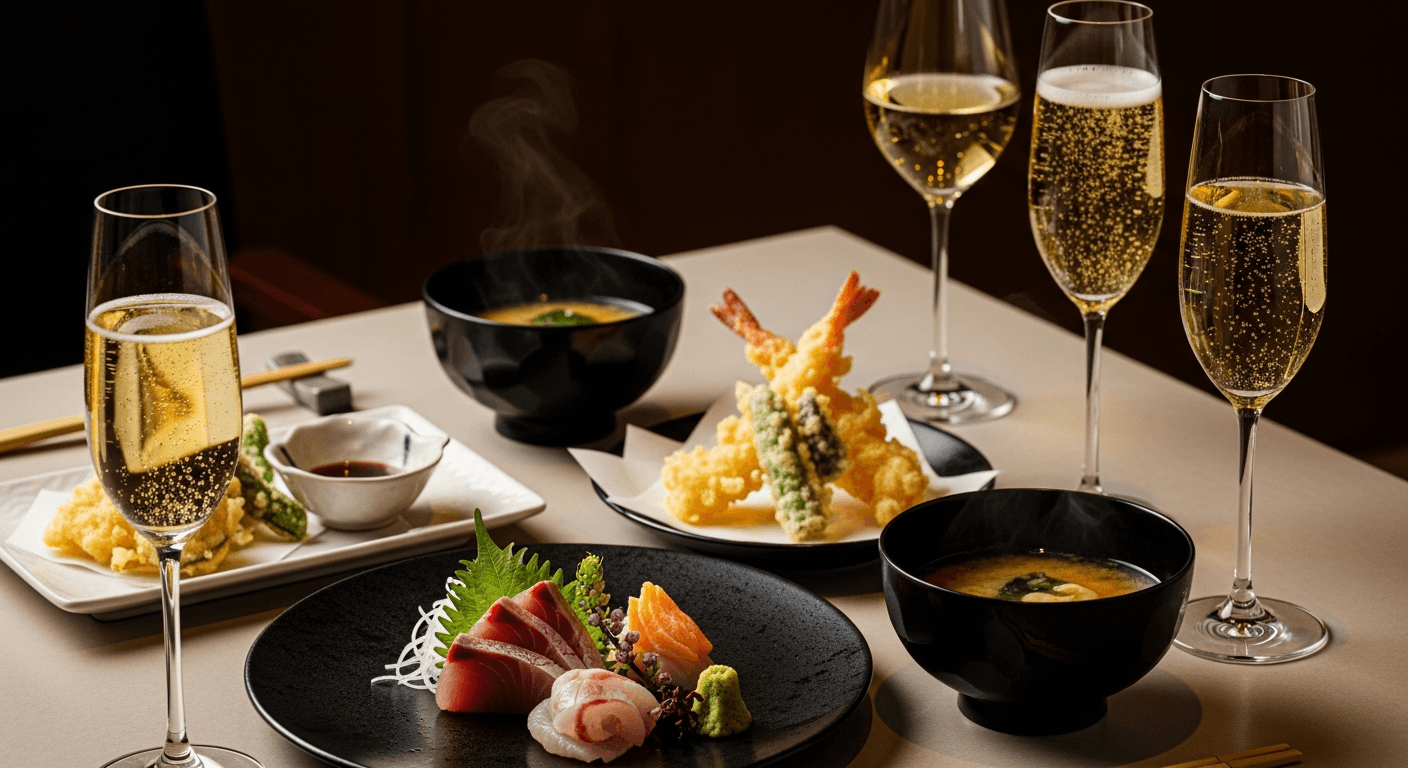
For decades, the default pairing for Japanese gastronomy, particularly sushi and sashimi, remained steadfastly sake or perhaps a crisp beer. Yet, beneath this seemingly immutable tradition, a quiet revolution has been unfolding, driven by chefs and sommeliers who recognise the profound affinity between the intricate flavours of Japanese cuisine and the effervescence of sparkling wine. This evolving palate challenges conventional wisdom, revealing that the delicate profiles of washoku are not merely complemented but often elevated by the right pour of bubbles.
The inherent structure of sparkling wines renders them exceptionally versatile partners for a broad spectrum of Japanese dishes. Their hallmark characteristics-bright acidity, palate-cleansing bubbles, and typically lower alcohol content-serve to refresh the mouth, cut through richness, and highlight delicate aromas rather than overpowering them. Crucially, the presence of umami, the savoury fifth taste abundant in ingredients like soy sauce, seaweed, and various seafood, creates a remarkable 'umami synergy' with Champagne. This chemical phenomenon enhances both the food and the wine, with Champagne's high acidity and low tannins proving particularly effective in balancing these complex savoury notes.
Few pairings demonstrate this harmony as vividly as tempura with sparkling wine. The crisp, airy texture of expertly fried tempura, whether featuring shrimp, white fish, or seasonal vegetables, finds its ideal counterpoint in the vivacity of bubbles. The wine's acidity and effervescence deftly cut through the dish's oiliness, refreshing the palate between bites. Brut-style Old World sparklers, such as traditional method Champagne, Cava, or Franciacorta, are often preferred for their pronounced minerality and invigorating acidity. For instance, a Blanc de Blancs Champagne, made from 100% Chardonnay, is an excellent choice for shrimp or vegetable tempura, while a richer Blanc de Noirs, predominantly Pinot Noir, might better complement sea eel. Chef Brandon Hayato Go, of the two-Michelin-starred Hayato in Los Angeles, even highlights Krug Champagne's precision, acidity, and texture as an exceptional match for tempura, noting its ability to 'energize the flavors'.
Sashimi: A Study in Delicacy
When confronting the pristine simplicity of sashimi, the delicate nature of sparkling wine truly shines. Dry sparkling wines are celebrated for their ability to cleanse the palate and accentuate the subtle flavours of raw fish without masking them. A Blanc de Blancs Champagne, with its delicate floral and citrus notes, is particularly suited to white fish sashimi, especially when served simply with salt rather than soy sauce. For a broader sashimi platter, including richer fish and accompaniments like wasabi and soy, a fuller-bodied Non Vintage Champagne, often with a greater proportion of Pinot Noir, such as Bollinger or Pol Roger, offers the necessary richness and structure. Alternatively, a crisp Brut Rosé Champagne, showcasing red fruit aromas of strawberry and raspberry, pairs exquisitely with salmon or tuna sashimi, particularly when seared and served with ponzu sauce. Beyond Champagne, Crémant de Loire or Crémant d'Alsace provide dry, lively, and aromatic alternatives that enhance various maki and sashimi preparations. Even a dry Prosecco, like Astoria's 'YU Sushi Sparkling' developed specifically for raw seafood, can elevate the experience with its natural acidity and subtle fruit.
Miso: Navigating Umami Depths
Pairing sparkling wine with miso, whether in its soup form or as a glaze, requires a thoughtful approach to its pervasive umami. For miso soup, a Blanc de Noirs Champagne, with its notes of fresh strawberry and raspberry, fine creamy bubbles, and subtle bready character, provides a refreshing contrast to the soup's savoury elements, effectively cleansing the palate. Alsace Rieslings, known for their zesty citrus and stone fruit profiles and bright acidity, also prove to be a fantastic match for miso soup. For more robust, umami-laden dishes, such as nimono-simmered dishes often prepared with dashi-a more opulent Non Vintage Champagne with significant Pinot Noir content is recommended for its ability to stand up to heartier, richer flavours. The key lies in selecting wines with sufficient acidity and complementary flavours that can navigate the depth of miso without being overwhelmed.
While the allure of Champagne is undeniable, the world of sparkling wine offers a broader canvas for exploration. Growers' Champagnes, with their emphasis on terroir and individual expression, often provide unique nuances that can be particularly engaging. Beyond France, traditional method sparkling wines from England, such as those from Sussex or Kent, increasingly offer high-quality alternatives with comparable acidity and minerality. Similarly, Italian Franciacorta, crafted using the méthode traditionnelle, presents a refined option. For those seeking value without compromise, a good quality Cava from Spain, especially a Cava Brut Reserva, delivers excellent acidity and a satisfying texture that can harmonise with many Japanese dishes.
The rules for pairing Japanese cuisine with sparkling wine are less about rigid dogma and more about understanding the interplay of textures, acidity, and that elusive fifth taste, umami. From the delicate crunch of tempura to the pristine cut of sashimi and the savoury depth of miso, sparkling wines offer a dynamic counterpoint, refreshing the palate and amplifying the inherent qualities of the food. The next time you sit down to a Japanese meal, consider reaching for a bottle of sparkling wine-be it a precise Blanc de Blancs from a reputable Champagne house, a vibrant Crémant from Alsace, or a delicate Prosecco. The experience promises a delightful dance of flavours, revealing why this once-unconventional pairing has become an essential 'rule' for the discerning palate.
More from the cellar.
Bottle Shock: The Unseen Travail of Transported Wine
Unravelling the debate: does wine truly need repose after its journey?
Tasmania's Ascendant Sparkling Wines
Australia's cool-climate island is redefining premium Méthode Traditionnelle.
Non-Vintage: A Cellar Master's Legacy
Behind Champagne's enduring house style lies the profound skill of its guardian.