Blanc de Blancs and Salmon: A Culinary Revelation
_Exploring the exquisite synergy between rich salmon and pristine Chardonnay sparkling wine._
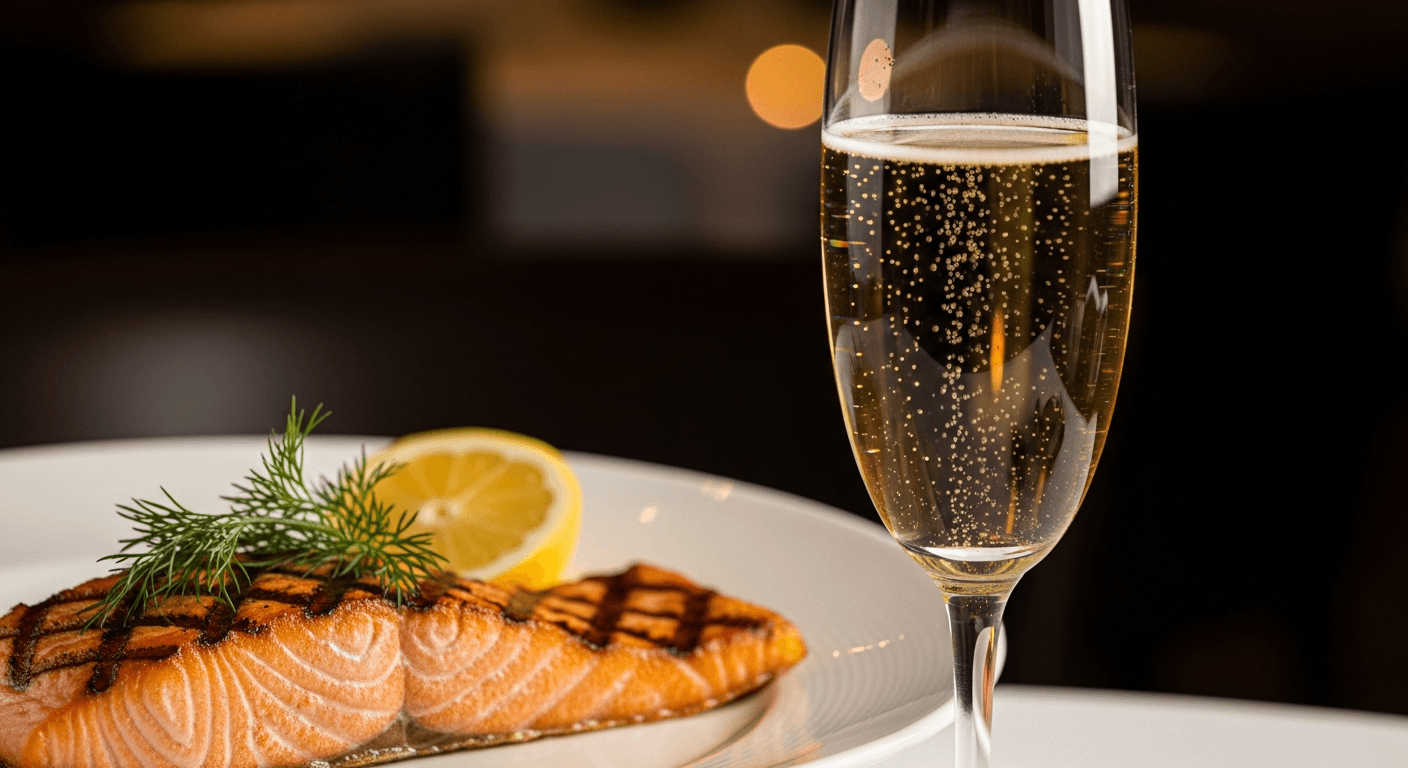
In the intricate world of food and wine pairing, certain combinations emerge not merely as agreeable matches, but as profound culinary revelations. While the conventional wisdom often cautions against pairing sparkling wines solely as an aperitif, or indeed the perilous union of tannic red wines with delicate fish-based dishes, which can result in an unpleasantly metallic palate sensation, there exists a specific, often overlooked, alliance that defies such generalisations. This is the compelling interplay between the robust, oily flesh of salmon and the crystalline elegance of Blanc de Blancs, a pairing that proves itself to be an exemplar of balance and gastronomic delight.
At its heart, Blanc de Blancs is an expression of purity, crafted exclusively from 100% Chardonnay grapes. This style, whose name translates to 'white from whites', originated in Champagne, with the first reported all-Chardonnay Champagne produced by Eugène Aimé Salon at Le Mesnil-sur-Oger in 1911, and its first commercial vintage in 1921. The Chardonnay grape thrives particularly in the chalk-rich soils of the Côte des Blancs, south of Épernay, a terroir that imparts a distinctive minerality and a backbone of vibrant acidity to the wine. These wines typically present with a pale gold hue, green highlights, and aromatic profiles ranging from delicate white flowers and citrus fruits to nuanced notes of brioche and chalk, particularly after extended ageing sur lattes.
Salmon, on the other side of this epicurean equation, is a fish celebrated for its versatility and its inherent richness. Its distinct taste and oily texture contribute a luxurious mouthfeel that can often overwhelm lighter, less structured wines. This substantial fat content is precisely what makes salmon a challenging, yet rewarding, subject for wine pairing. The key lies in finding a wine with sufficient character to cut through this richness without overpowering the fish's nuanced flavours, a role that Blanc de Blancs fulfils with remarkable precision.
The fundamental success of this pairing hinges on the sparkling wine's pronounced acidity and its effervescence. The high acidity acts as a natural counterpoint to the salmon's fat, effectively cleansing the palate and preparing it for the next bite. Simultaneously, the fine, persistent bubbles provide a refreshing textural contrast, preventing the combination from feeling heavy and enhancing the overall dining experience. It is this dynamic interplay that elevates the simple act of eating into a sophisticated sensory event; indeed, America's first commercially produced Chardonnay-based brut sparkling wine, a Blanc de Blancs, was released by Schramsberg in 1965.
Beyond mere acidity and effervescence, the complex autolytic notes developed during the secondary fermentation and prolonged ageing on yeast lees contribute significantly to the harmony. Aromas and flavours of brioche, toasted almond, and sometimes honey or warm pastry, are common in well-aged Blanc de Blancs. These savoury, often nutty, characteristics complement the inherent richness of salmon, particularly when grilled or pan-seared, adding depth without obscuring the fish. Furthermore, some Blanc de Blancs undergo malolactic fermentation, which can impart a creamy, velvety texture, aligning beautifully with the salmon's tender flesh.
Nuances of Choice
When selecting a Blanc de Blancs for salmon, the specific style and dosage can fine-tune the pairing. For lighter preparations, such as smoked salmon or raw preparations like gravlax or sashimi, an Extra-Brut or Brut Nature Blanc de Blancs is often ideal. With less than 6 grams per litre of residual sugar, these drier styles offer heightened tension and minerality, which beautifully complement the salinity and delicate flavours of the fish. The crispness of a Blanc de Blancs served at approximately 10 °C enhances its palate-cleansing properties, making it an excellent choice for rich, oily fish.
Terroir and Craft
The profound connection between Blanc de Blancs and salmon is also a testament to the meticulous craftsmanship and the unique terroirs that define this sparkling wine style. The chalky soils of Grand Cru villages such as Le Mesnil-sur-Oger, Avize, and Cramant in the Côte des Blancs are renowned for yielding Chardonnay grapes of exceptional quality, which translate into wines of unparalleled finesse. Esteemed producers like Salon, Pierre Peters, and Taittinger, with its prestigious Comtes de Champagne, exemplify the pinnacle of Blanc de Blancs production, showcasing how a wine's origin deeply influences its suitability for gastronomic pairings.
This sophisticated pairing of salmon and Blanc de Blancs underscores a fundamental principle of wine and food matching: balance. The high acidity and effervescence of the sparkling wine provide a refreshing contrast to the salmon's richness, while its subtle autolytic notes offer a harmonious congruence. We encourage you to explore this exquisite combination, perhaps with a lightly smoked salmon or a perfectly pan-seared fillet, to experience the truly elegant synergy that elevates a meal from mere sustenance to a memorable culinary event. The pursuit of such perfect pairings is, after all, a cornerstone of enlightened enjoyment.
More from the cellar.
Bottle Shock: The Unseen Travail of Transported Wine
Unravelling the debate: does wine truly need repose after its journey?
Tasmania's Ascendant Sparkling Wines
Australia's cool-climate island is redefining premium Méthode Traditionnelle.
Non-Vintage: A Cellar Master's Legacy
Behind Champagne's enduring house style lies the profound skill of its guardian.