The Silent Saboteurs of Sparkling Grandeur
Preserving the delicate effervescence of Champagne demands precise, consistent care.
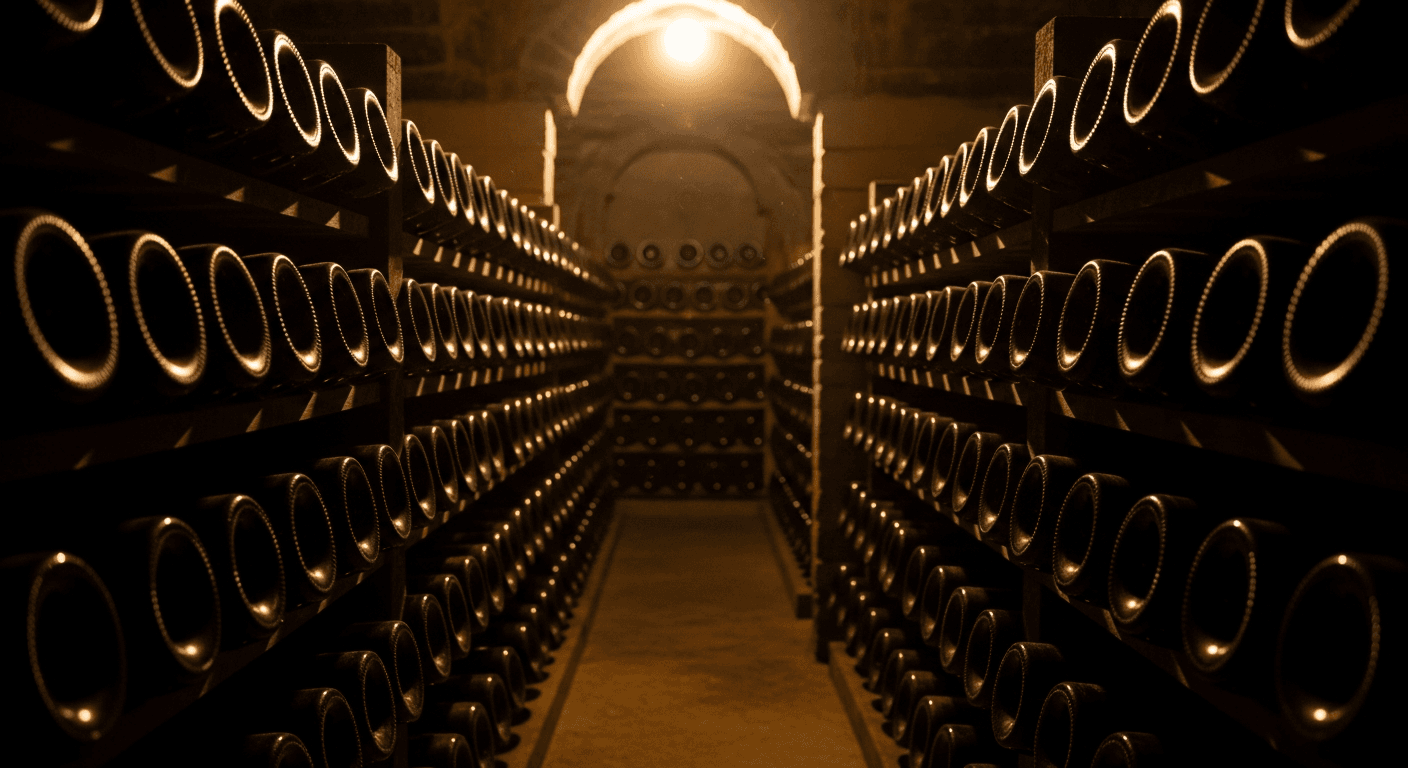
The celebratory pop of a Champagne cork, the cascade of fine bubbles, the intricate dance of aroma on the palate-these moments are the culmination of meticulous viticulture and winemaking. Yet, this very grandeur is remarkably fragile. Many a splendid Cuvée, destined for a momentous occasion, has met an untimely decline not in the glass, but in the less-than-ideal conditions of a home cellar or cupboard. The subtle enemies of Champagne-temperature, light, humidity, and even bottle orientation-conspire to diminish its inherent brilliance, often before the bottle is even opened. Understanding these environmental factors is paramount to safeguarding the integrity of this most cherished sparkling wine.
Temperature stands as the foremost guardian of Champagne's longevity. An ideal storage range of 10-12 °C (50-54 °F) ensures a gradual, graceful evolution, allowing the complex secondary aromas to develop without undue haste. Crucially, consistency is key; wild fluctuations in temperature are far more detrimental than a slightly higher but stable reading. Such variations can stress the cork, leading to expansion and contraction that compromises its seal and invites premature oxidation. Temperatures exceeding 15 °C (59 °F) risk accelerating the wine's ageing process, robbing it of its freshness and vibrancy. While a household refrigerator, typically between 4-7 °C, is suitable for chilling a bottle prior to serving or for very short-term keeping of an opened bottle, it is not recommended for long-term storage due to its dry environment.
Humidity works in concert with temperature to preserve the cork's integrity. An environment with a humidity level between 70% and 85% is often cited as ideal for Champagne storage. This moisture prevents the cork from drying out, shrinking, and allowing air-the wine's primary antagonist-to seep into the bottle. A dry cork can lead to premature oxidation, dulling the wine's effervescence and flavour profile. Conversely, excessive humidity, while less damaging to the wine itself, can foster mould growth on labels and corks, detracting from the bottle's aesthetic and potential resale value. Monitoring this with a hygrometer can be a prudent measure for dedicated collectors.
The Scourge of Lightstrike
Perhaps the most insidious threat to Champagne is light, particularly ultraviolet and blue spectrum wavelengths, which can trigger an irreversible fault known as 'goût de lumière', or lightstrike. Research by Charpentier and Maujean at the University of Reims in 1981 revealed that riboflavin (vitamin B2), naturally present in wine, reacts with light to break down methionine, a sulphur-containing amino acid. This photochemical reaction produces unpleasant sulphur compounds such as methanethiol, dimethyl disulfide, and dimethyl sulfide, imparting aromas reminiscent of cooked cauliflower, wet wool, or rotten eggs. The speed of this degradation is startling; damage can occur in as little as five minutes in direct sunlight, or within weeks under fluorescent or even LED lighting. This vulnerability explains why many Champagne bottles are crafted from dark green or brown glass, which offers significantly more protection than clear bottles. Prestige Cuvées like Louis Roederer Cristal are often enveloped in UV-protective cellophane or paper, a testament to the severity of this threat.
Horizontal Versus Upright
The optimal orientation for storing Champagne bottles has long been a subject of debate, though a consensus generally supports horizontal placement for long-term cellaring. Storing bottles on their side ensures the wine remains in constant contact with the cork, thereby keeping it moist and swollen. This contact is crucial for maintaining the cork's elasticity and its airtight seal, preventing oxygen ingress that can lead to premature oxidation and a loss of effervescence. While some sources suggest that the internal pressure of a sparkling wine may provide sufficient humidity to keep the cork moist even in an upright position for short periods, typically up to a month, for anything beyond this, the horizontal approach is widely endorsed by experts. A study by the Comité Champagne acknowledged that long-term upright storage under stable temperature conditions might not significantly affect quality, yet the prevailing expert recommendation for cellaring still leans towards horizontal storage to ensure consistency and cork integrity over extended periods.
Beyond these primary considerations, other subtle factors contribute to Champagne's preservation. Vibration, for instance, can agitate the delicate wine, accelerating its ageing and potentially diminishing its finesse. Thus, storage away from household appliances or heavy foot traffic is advisable. Similarly, strong odours can permeate the cork and taint the wine, underscoring the importance of a clean, neutral storage environment. The size of the bottle also plays a role in ageing potential; a Magnum (1.5 L) or larger format offers a more gradual and complex maturation due to a lower ratio of oxygen to wine volume, allowing for a slower, more even development of its aromatic profile and a finer, more enduring mousse. Non-vintage Champagnes are generally ready upon release and typically maintain their quality for 3-5 years, while Vintage Cuvées and prestige bottlings can evolve beautifully for 10-20 years or more under optimal conditions.
Ultimately, the art of Champagne storage is not merely about preserving a beverage; it is about respecting the intricate craftsmanship and time invested in each bottle. By diligently controlling temperature, humidity, and light exposure, and by ensuring proper bottle orientation, we uphold the promise of the winemaker. The true expression of a Blanc de Blancs or a rich Brut Millésime, with its evolving bouquet of brioche, toasted nuts, and citrus, hinges upon these often-overlooked details. So, as you contemplate your next acquisition or retrieve a treasured bottle from your collection, consider the silent care that ensures its brilliance, allowing the effervescent spirit of Champagne to truly shine.
More from the cellar.
Bottle Shock: The Unseen Travail of Transported Wine
Unravelling the debate: does wine truly need repose after its journey?
The Enduring Effervescence of an Open Bottle
Unravelling the science and art of preserving sparkling wine's ephemeral magic.
The Silent Uncorking of Sparkling Wine
A gentle 'soupir' preserves the integrity and effervescence of fine sparkling wine.