The Precise Art of Champagne's Pressing Fractions
Unveiling the pivotal distinction between Cuvée and Taille in fine Champagne production.
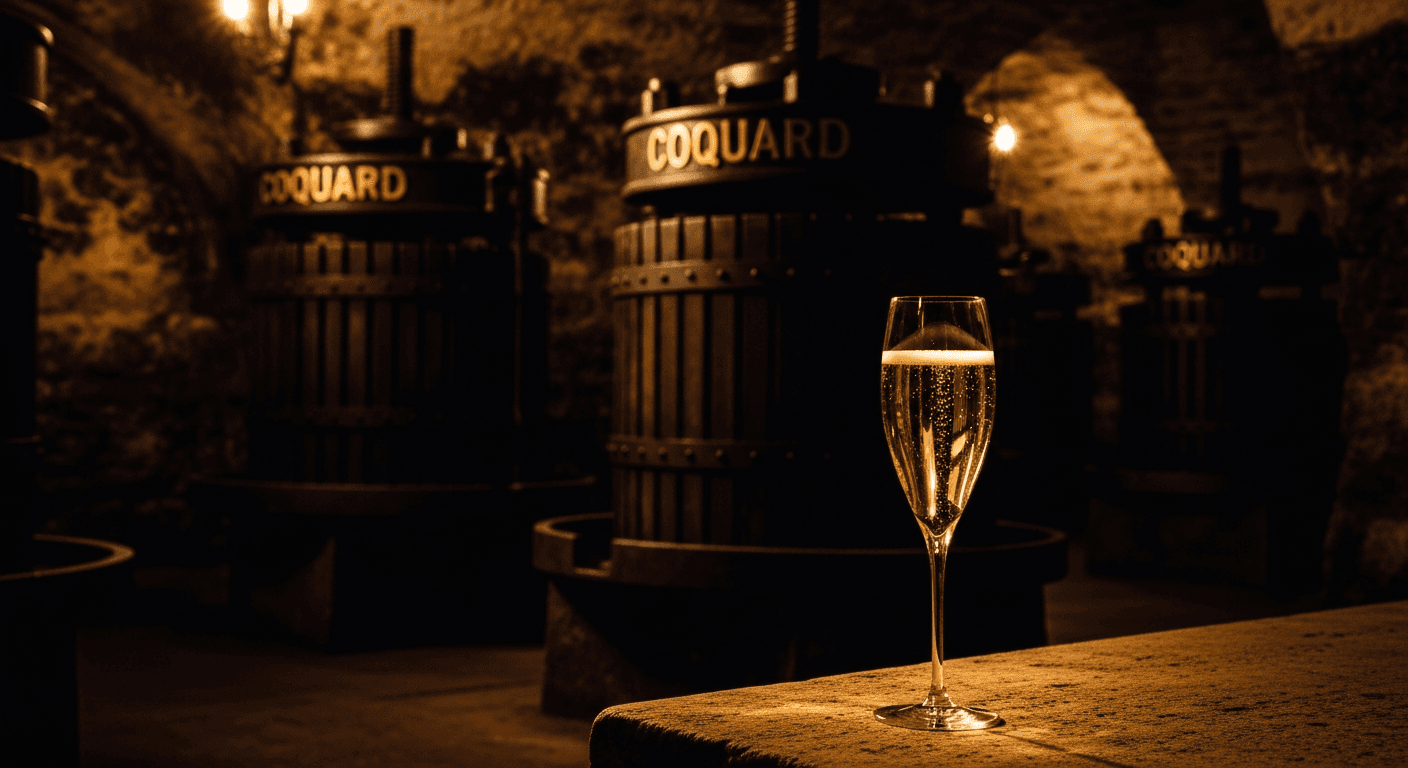
In the hallowed cellars of Champagne, where tradition intertwines with exacting standards, the journey from grape to glass is defined by a precision few outside the region fully grasp. Consider the pressing of a 4,000 kilogram marc of grapes: only the first 2,050 litres of juice, known as the Cuvée, are considered the purest expression of the fruit, a testament to the rigorous standards governing this iconic sparkling wine. This fractional extraction is not merely an administrative detail but the very bedrock upon which Champagne's famed finesse is built.
The Cuvée, often referred to as the 'head' of the press, represents the initial, gentle flow of juice, liberated with minimal pressure. This pristine liquid is naturally rich in both sugar and tartaric and malic acids, providing a balanced foundation crucial for wines destined for extended aging. Its chemical composition, untainted by pigments or significant oxidation, ensures a clarity and aromatic delicacy that defines the most elegant Champagnes, offering notes of citrus, florals, and a compelling minerality.
Following the Cuvée, a subsequent pressing yields the Taille, or 'tail', comprising approximately 500 litres of juice from the same marc of grapes. This later fraction, extracted with increased pressure, presents a different profile: it is typically fruitier, less acidic, and contains a higher concentration of phenolics, potassium, and coarser structural elements. While offering body and an earlier aromatic expressiveness, wines predominantly featuring Taille tend to exhibit less longevity and a broader palate structure compared to those crafted exclusively from Cuvée.
The discernible differences between these fractions stem from the grape's cellular structure. The pulp closest to the skin and seeds, released during the later Taille pressing, contains more phenolic compounds and mineral salts such as potassium, contributing to a darker colour and a slightly higher pH. Conversely, the core of the grape, yielding the Cuvée, is rich in acids and sugars, responsible for the vibrant freshness and aging potential that are hallmarks of exceptional Champagne. A 2020 study investigated the impact of press cycle on phenolic composition, showing significant changes after pomace reworking.
It is within the art of assemblage that the Chef de Cave truly navigates the nuanced tapestry of these press fractions. While many prestige cuvées are composed solely of Cuvée to achieve maximum elegance and cellaring potential, the Taille is far from discarded. Its inherent fruitiness can be judiciously blended to add breadth, roundness, or a youthful vibrancy to certain styles of Champagne, particularly non-vintage expressions, ensuring a consistent house style year after year.
This exacting approach to juice extraction is underpinned by a broader commitment to quality throughout the region. Champagne's appellation law mandates hand-harvesting of whole bunches, preventing premature crushing and oxidation, and grapes must be pressed within eight hours of picking. Pressing centres, accredited since 1993 based on over twenty criteria, ensure that every stage adheres to the rigorous standards set by the Comité Champagne (CIVC).
The CIVC's regulations are stringent, dictating that a maximum of 102 litres of must may be extracted from 160 kilograms of grapes. From a standard 4,000 kg marc, the total permissible juice for Champagne production is 2,550 litres - 2,050 litres of Cuvée and 500 litres of Taille. Any further juice, known as the rebêche, is legally required to be sent for distillation, underscoring the absolute priority given to quality over quantity. This strict framework ensures that only the finest juice contributes to the final wine.
Ultimately, the precise separation and thoughtful utilisation of Cuvée and Taille are not mere technicalities but fundamental pillars of Champagne's enduring legacy. They are crucial elements in the intricate puzzle of achieving that inimitable balance of freshness, complexity, and longevity. Understanding this meticulous process allows for a deeper appreciation of the subtle, yet profound, differences that define each glass of Champagne, inviting drinkers to discern the artistry in every effervescent sip and explore the diversity within this celebrated appellation.
More from the cellar.
Bottle Shock: The Unseen Travail of Transported Wine
Unravelling the debate: does wine truly need repose after its journey?
The Enduring Effervescence of an Open Bottle
Unravelling the science and art of preserving sparkling wine's ephemeral magic.
The Silent Saboteurs of Sparkling Grandeur
Preserving the delicate effervescence of Champagne demands precise, consistent care.